Worth remembering
- Around midsummer the sun dips below the horizon but the sky stays bright, so a late fjord trip still shows you cliffs, water and mountain tops in soft light.
- True midnight sun belongs to places north of the Arctic Circle. Ålesund sits south of it, so the sun does set at the height of summer, but the night never turns fully black.
- December is the wettest month of the year, with 210 millimetres of rain[1], and the daylight is short and low. Put the outdoor part of the day in the middle hours.
- May is the driest month of the year, with 85 millimetres of rain[1]. Late spring is a good bet for clear air over the water and quiet viewpoints.
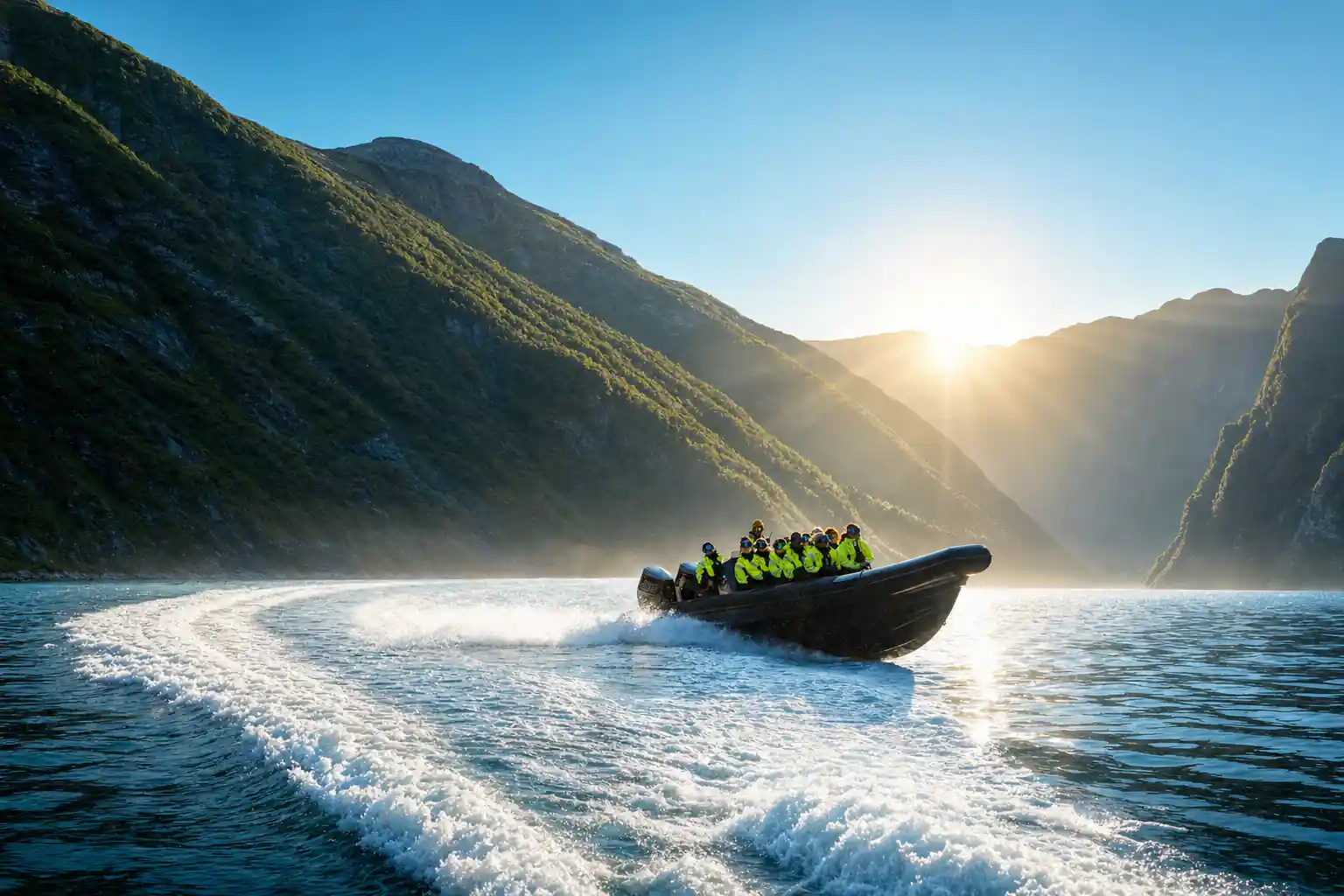
- The RIB fjord safari to Hjørundfjorden takes 105 minutes[2], and starting times are shown when you check availability.
- Top choice RIB Hjørundfjord safari from US$157 Duration105 minutes[2]Rating4.88 from 150 reviews[2]GuideLive guide in English[2]CancellationFree up to 24 hours ahead[2] Check availability
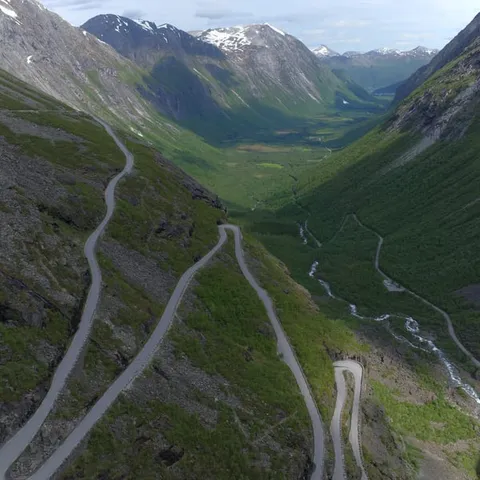
- Trollstigen tour from US$190 Duration6 hours[3]Rating4.48 from 740 reviews[3]GuideLive guide in English[3]CancellationFree up to 24 hours ahead[3] See this tour
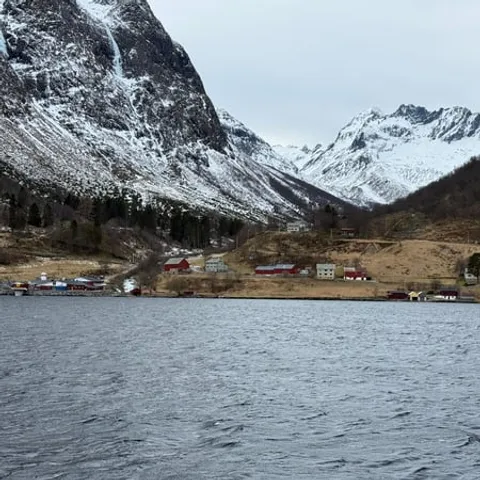
- MS Bruvik fjord tour from US$156 Duration7 hours[4]Rating4.54 from 19 reviews[4]GuideLive guide in English[4]CancellationFree up to 24 hours ahead[4] See this tour
Ålesund is spread across seven large islands: Hessa, Aspøya, Nørvøya, Oksenøya, Ellingsøya, Humla, and Tørla.
Go for the light, plan for the rain
Light and comfort
- Take sunglasses and a cap; a low northern sun can sit straight in your eyes across the water.
- Wear warm layers and a windproof outer layer; open water is cold even on a bright afternoon.
- Note the start time when you book, then build the rest of your day around sunrise and sunset.
- Bring a dry bag for your phone and camera, since spray and showers are part of the deal.
Bookings and money
- Reserve boat and fjord trips ahead for the bright weeks, when the harbour is at its busiest.
- Prices on the tour listings are in US dollars; cards are accepted almost everywhere in Norway.
- Many listings offer free cancellation in advance, so a grey forecast need not end the plan.
- Check access details before booking if you need step-free options; several tours are wheelchair accessible.
What a northern latitude does to a day
Ålesund sits far enough north that the sun's daily arc changes shape completely between the seasons. In summer it climbs high, tracks a long slow curve across the sky and takes its time going down. In winter it barely lifts above the rooftops, drags along the southern horizon and drops again. The town faces open sea on several sides, and water keeps the air mild, so the light here is often soft rather than harsh, with cloud, mist and drizzle doing as much to the look of a day as the sun itself.
Ålesund is spread across seven large islands: Hessa, Aspøya, Nørvøya, Oksenøya, Ellingsøya, Humla and Tørla.[5] That geography shapes the light as much as the latitude does. Almost every street has water within a short walk, and open water bounces light back into the sky, so a grey afternoon here still reads as bright. It also means you are rarely far from a quay, a bridge or a viewpoint with a clear line to the horizon.
The town is busy when the light is long. In 2024 Ålesund had 656,678 day cruise passengers, the highest number among Norwegian ports.[6] On a bright summer day that traffic fills the centre, the waterfront and the best-known viewpoints. If you want the quiet version of the same view, go out early, or wait until the evening when the day visitors have gone back on board.
Midsummer, and why it is not midnight sun
The midnight sun is real in Norway, but it belongs to places north of the Arctic Circle. Ålesund lies south of that line, so the sun still sets at the height of summer. What you get instead is a night that refuses to go dark: a long dusk in the small hours, a strip of pale colour along the northern horizon, and enough light to walk, sit outside or take photographs without a flash. Travellers often call it the blue hour, and in midsummer it can stretch across most of the night.
This is when an evening on the water earns its keep. The RIB Ålesund - Fjordsafari Hjørundfjord runs for 105 minutes with a live guide in English, and in the weeks around midsummer the fjord still has colour and detail on its walls long after dinner.[2] The same goes for the longer boat and bus trips: the light is not a bonus on top of the scenery, it is half of the scenery.
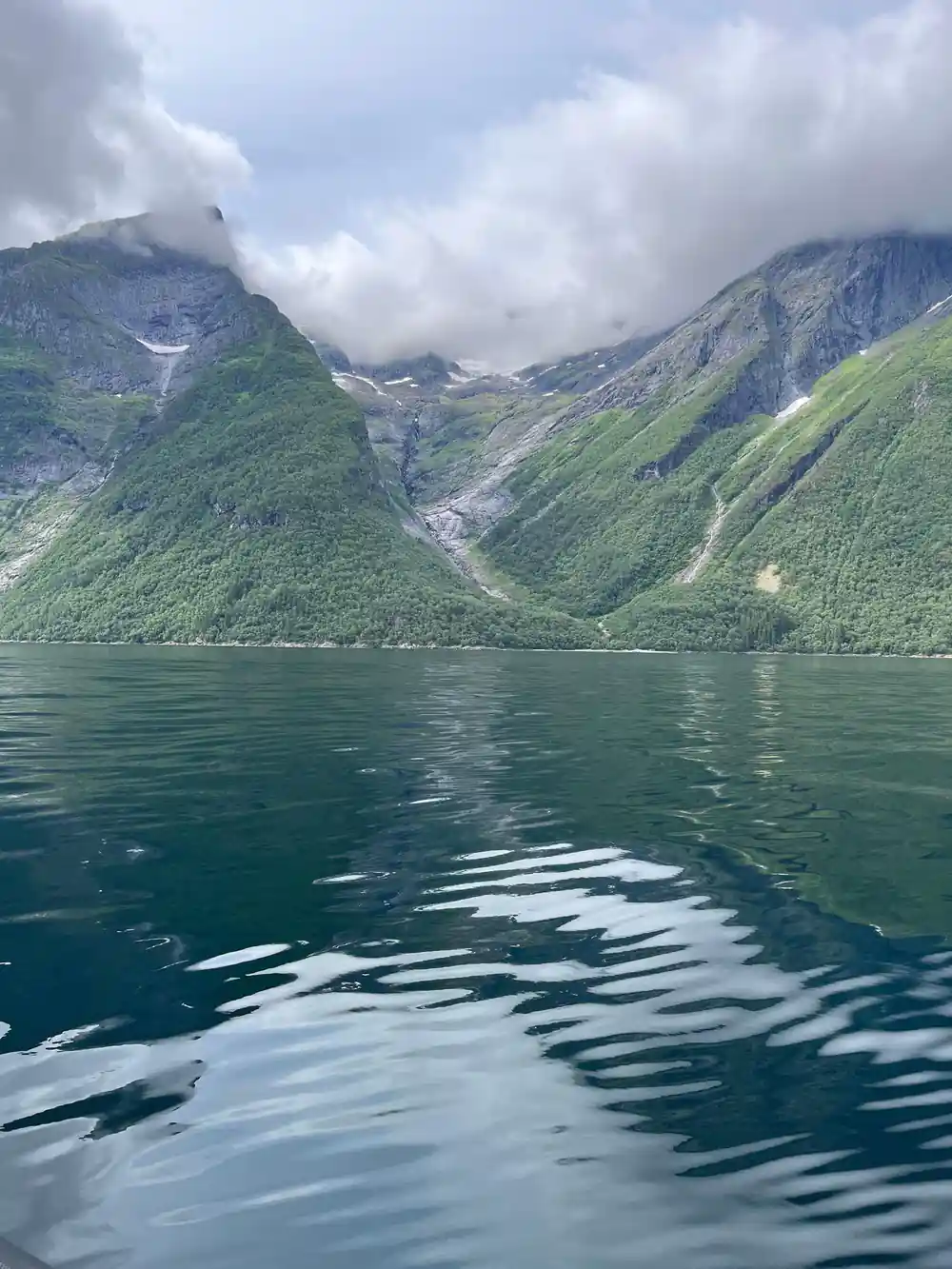
Rain comes into every calculation. Ålesund receives 1730 millimetres of precipitation per year, ranging from 85 millimetres in May to 210 millimetres in December.[1] A wet day flattens the water and hides the peaks, but it also leaves mist hanging in the gullies and gives the fjord a darker, heavier look that photographs beautifully. Pack for both versions of the day and you will enjoy whichever one arrives.
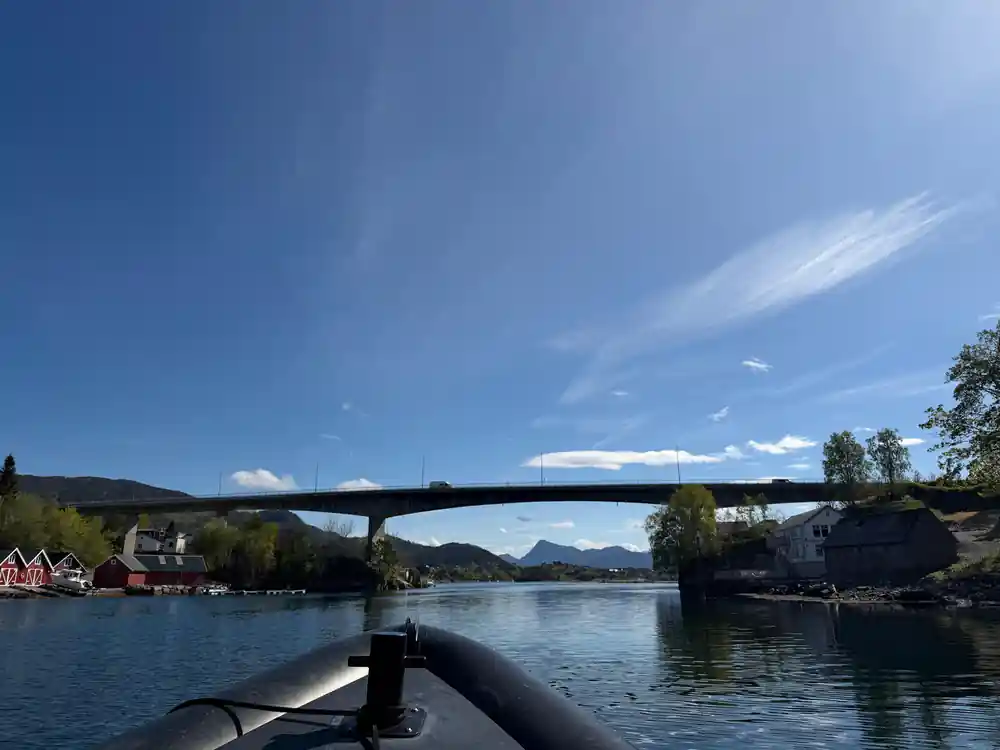
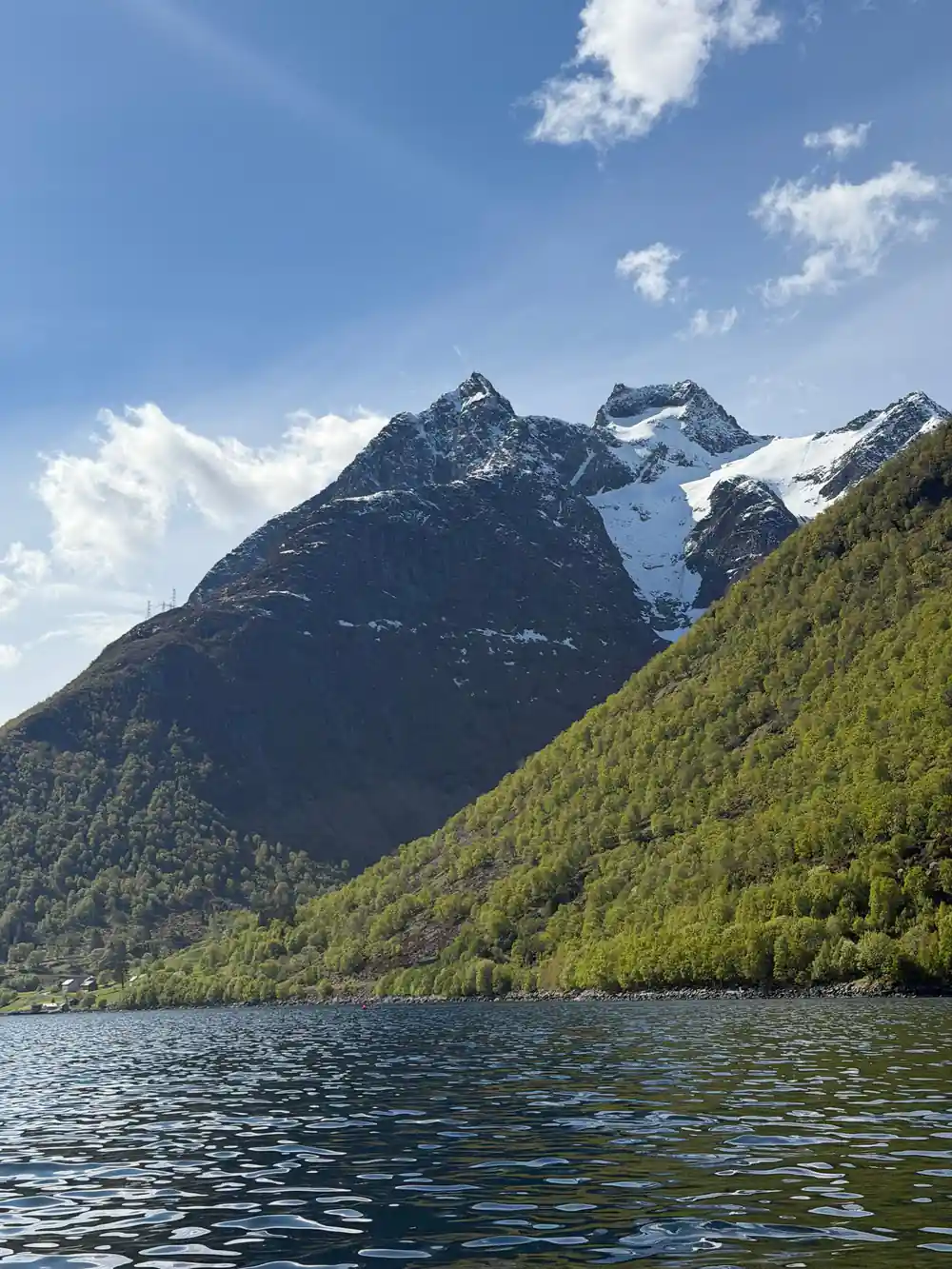
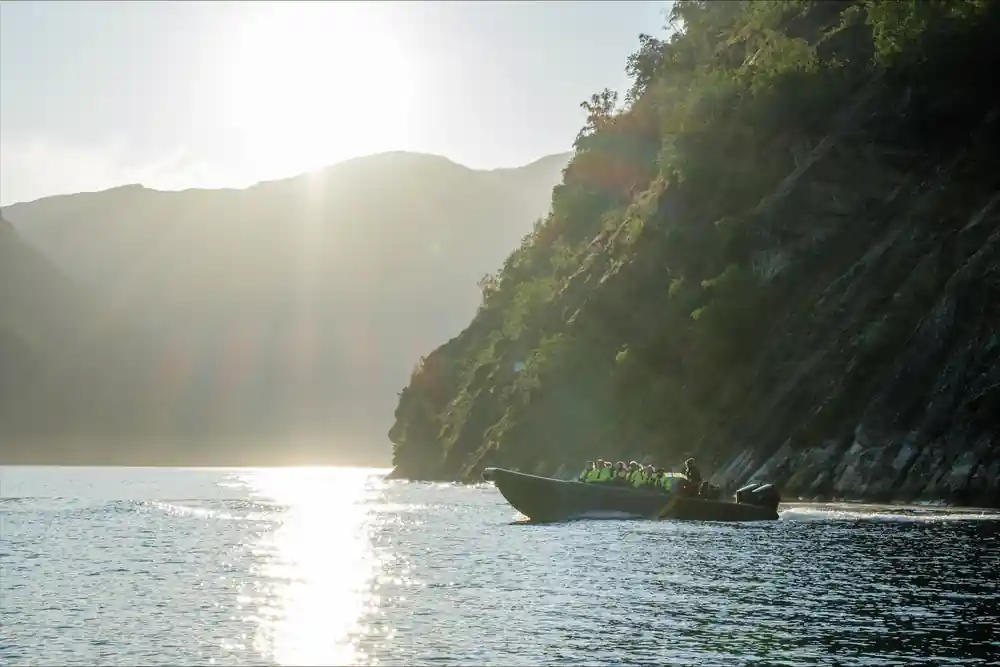
Morning light over the Hjørundfjord, seen from a boat on flat water.
The December floor
Winter is the opposite end of the calendar. The sun stays low, the bright part of the day is short, and the angle of the light is so shallow that everything looks lit from the side. Shadows run long across the streets, the sea turns grey-blue, and any colour in the sky arrives and leaves quickly. It is a beautiful time to be in the town, and a demanding one for anything outdoors.
December is the wettest month of the year, with 210 millimetres of rain.[1] That, plus the low light, is an argument for building a day around short outdoor blocks with warm, dry stops in between. The centre suits that rhythm: Ålesund was rebuilt in Jugendstil (Art Nouveau), the architectural style of the time, after the fire[7], and those facades, towers and painted shopfronts carry the streets even when the sky gives nothing.
If you are visiting in the darker months, treat daylight as the main event. Put the boat trip, the viewpoint or the long coastal walk in the middle hours, keep the late afternoon for a museum, a cafe or the aquarium, and expect any tour that starts after lunch to finish in the dark. Winter light is short, but it is also low, golden and worth chasing.
The months in between
Spring changes the day length quickly. Week by week the evenings stretch, and by the end of spring there is still usable light long after an early dinner. May is also the driest month of the year in Ålesund, with 85 millimetres of rain[1]. Late spring is a good bet for clear air over the water and for walks up to the viewpoints before the summer traffic arrives.
Autumn runs the same film backwards. The light drains out of the evenings first and then out of the mornings, and by the middle of the season an evening walk wants a jacket with a hood and maybe a small torch. The reward is the low, warm light of autumn afternoons, fewer people on the ferries and boats, and a sea that looks colder and cleaner than it did at the height of summer.
The daylight question is also part of a wider travel plan. Bergen, the other big city on this coast, is 45 minutes away by plane, about 7 hours and 30 minutes by car, and about 9 hours and 30 minutes by bus.[8] Whichever way you travel, the light you get at the far end will be much like the light you left, so a slow journey overland is not really a sacrifice.
from US$157
The RIB safari to Hjørundfjorden runs 105 minutes and holds 4.88 from 150 reviews.[2]
When the light is actually best
Early morning and late evening are when the landscape gives most. Peaks turn pink, then copper, then blue; the water goes flat and silvery; and the low sun stretches the shadow of every ridge across the fjord. In midsummer those hours are also the quietest, since most people are eating or sleeping while the best light is on the water.
For a wide view over the town, climb to the Aksla viewpoint, which is reached by a stone staircase of 418 steps.[9] From the top, the islands, the harbour and the open sea are laid out below, and the light shifts fastest at the edges of the day. It is a short walk from the centre and an easy one to fit around a boat departure.
On the water the effect is stronger. The Storfjord is one of Norway's ten longest fjords, stretching 110 kilometres out to the Sulafjord and reaching a depth of 672 metres at its deepest.[10] Walls that steep keep direct sun off the water for much of the day, so the ends of the day carry the drama and the middle can look flat. If the light matters to you, aim for the early or the late departure.
What this means for booking a time
Start times matter more here than in most destinations. The RIB Ålesund - Fjordsafari Hjørundfjord takes 105 minutes, runs with a live guide in English and offers free cancellation up to 24 hours in advance, with starting times shown when you check availability.[2] That last part is worth having when the forecast turns overnight and your one free afternoon is the next day.
Longer trips need more thought. A fjord tour with lunch on MS Bruvik, which stops in Sæbø, takes 7 hours.[4] The Trollstigen sightseeing tour through the villages and fjord landscape takes 6 hours.[3] In the dark months a trip of that length covers the whole usable day, so it makes sense to book it as the centrepiece and build everything else around it.
Ratings help you choose between operators. The Trollstigen tour is rated 4.48 from 740 reviews[3], and the RIB fjord safari is rated 4.88 from 150 reviews.[2] Reviews do not tell you what the sky will do on your date, but they do tell you which companies turn up on time and look after people on the water.
The practical side of long light
Long light has small consequences that catch people out. Hotel curtains are often thin, so an eye mask helps at the brightest time of year if you want to sleep before the sky dims. Meals and bedtimes drift later, and an evening walk can still feel like the middle of the afternoon. Give yourself permission to eat late and to start late, and the season stops fighting your body clock.
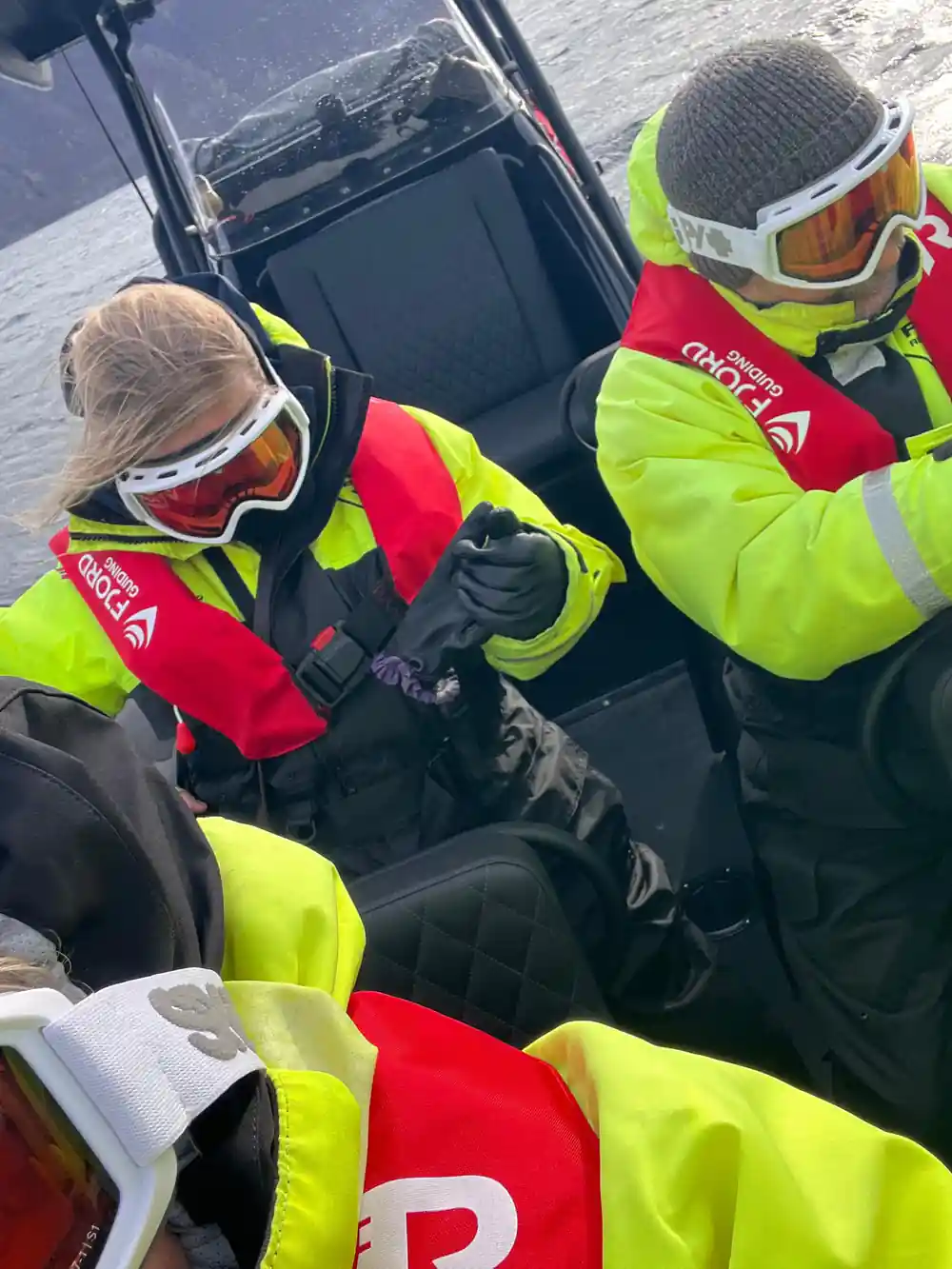
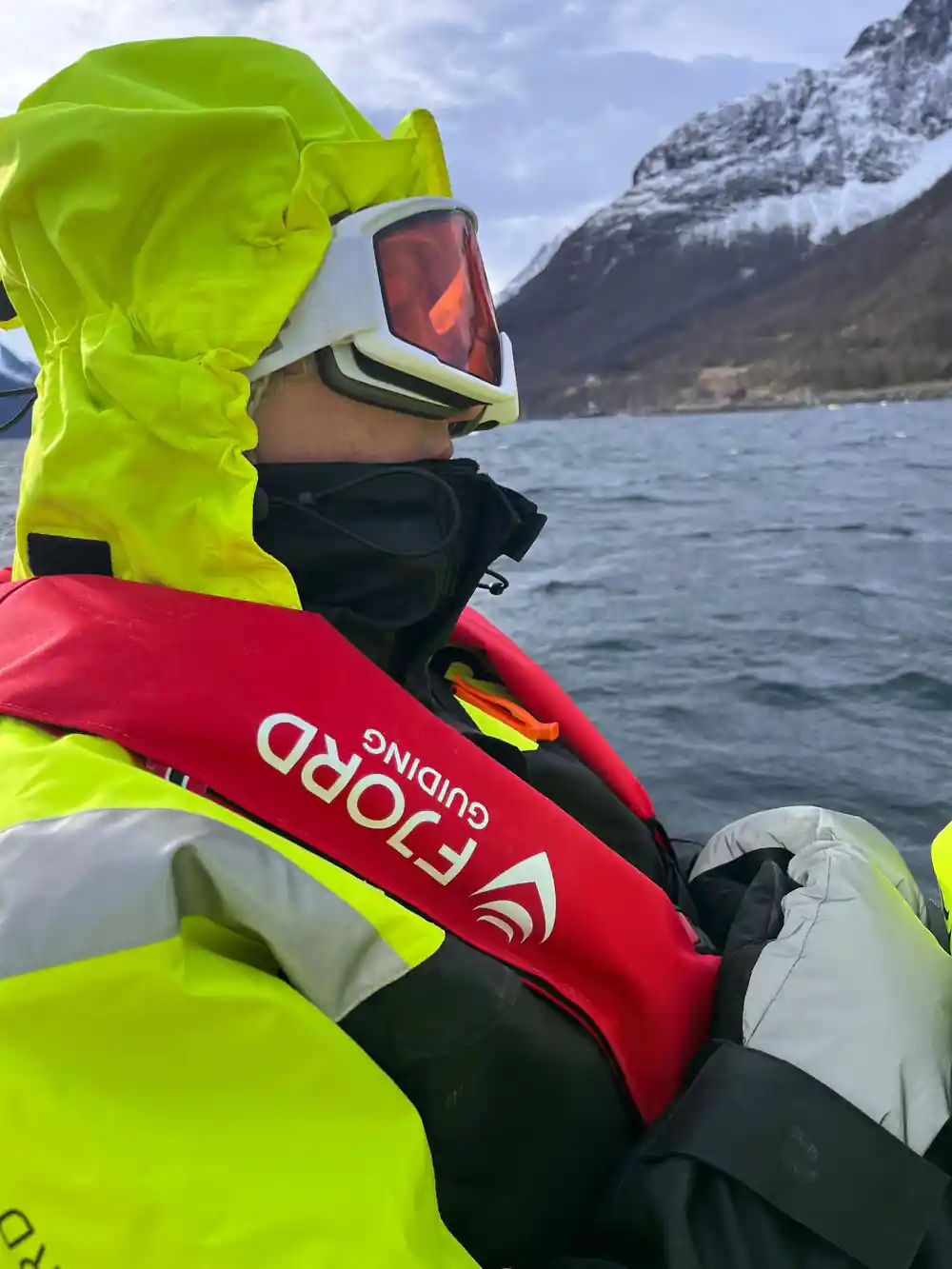
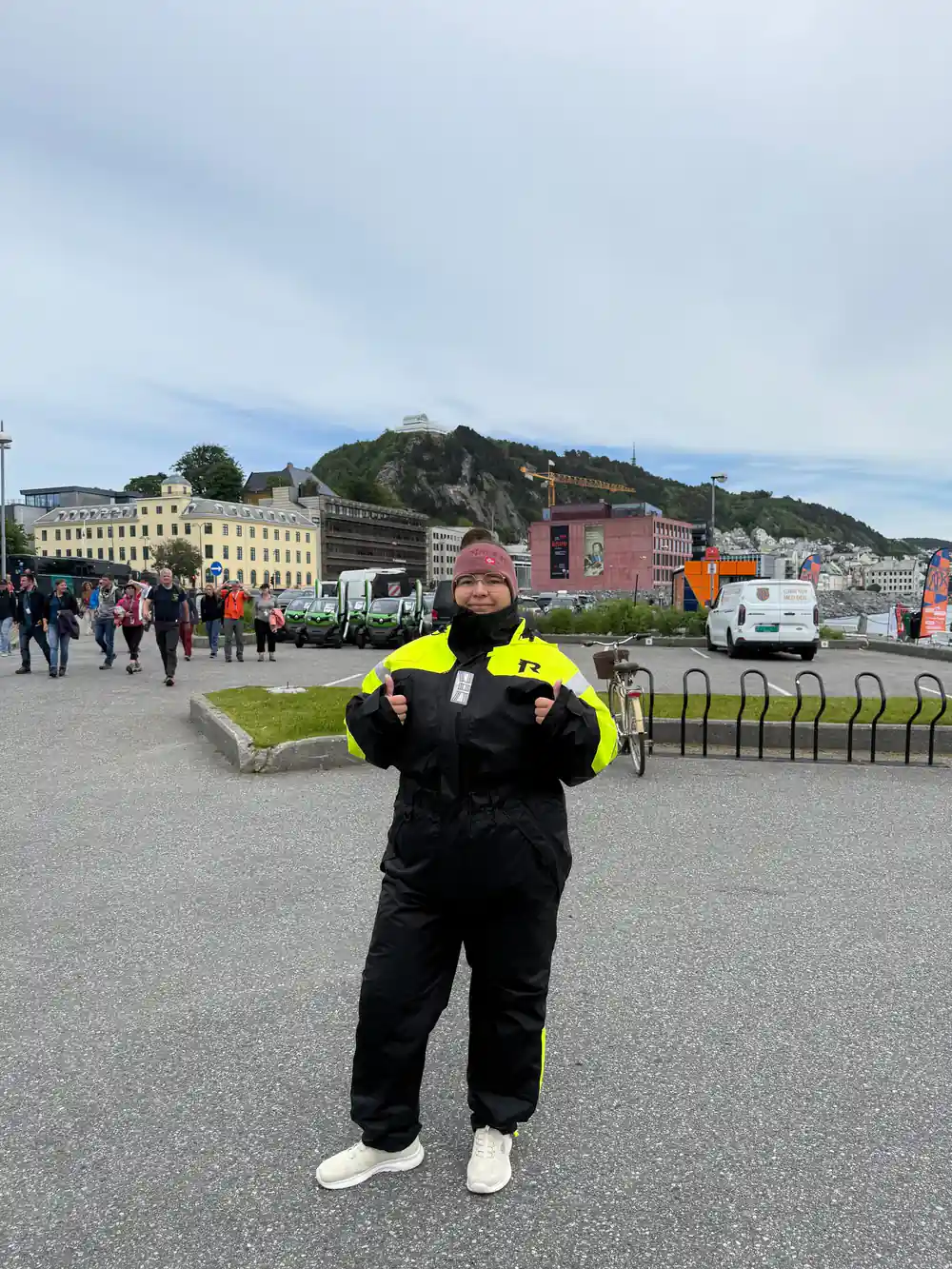
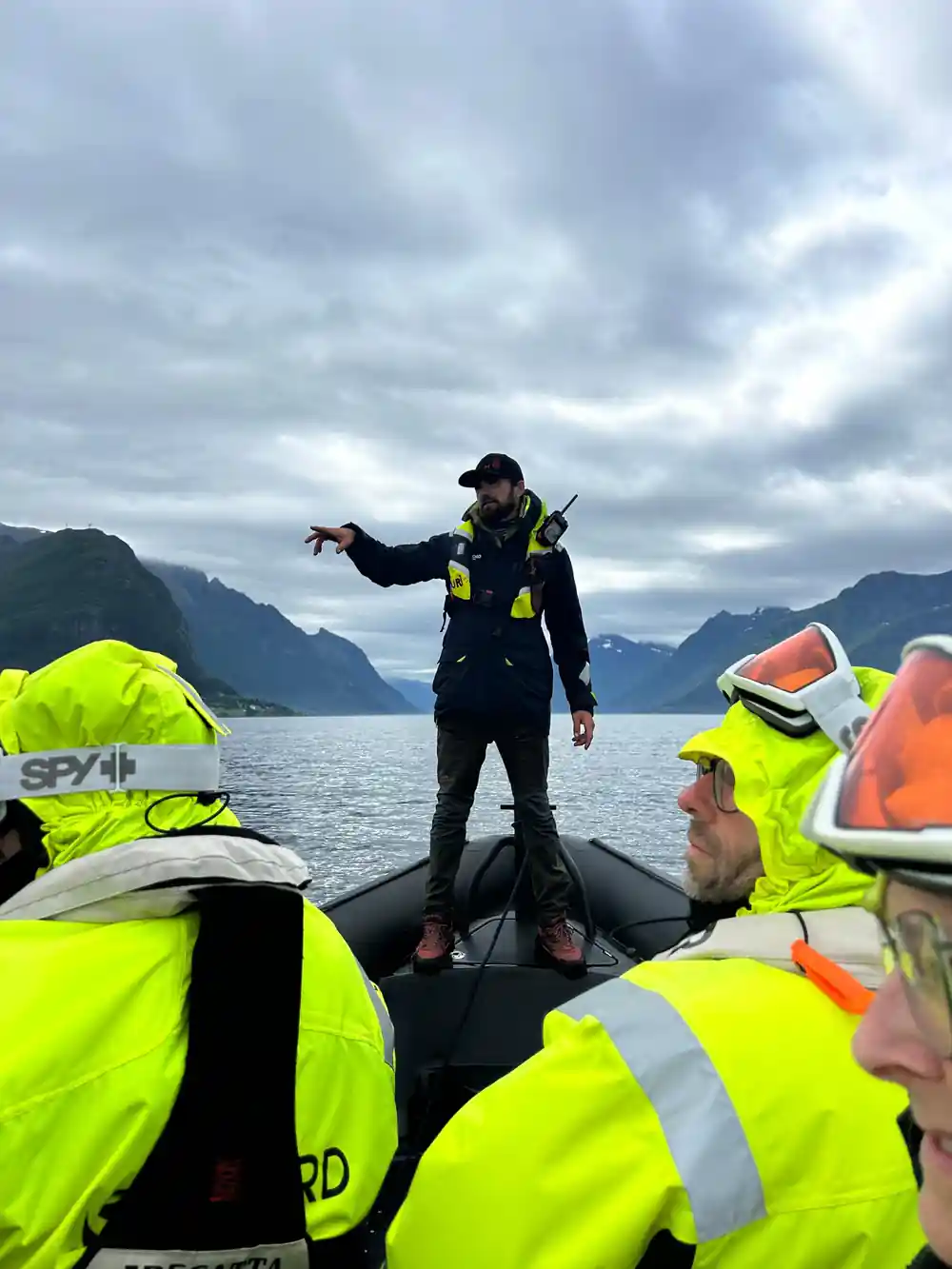
On the water, dress for speed rather than for the temperature on the quay. Layers, a windproof shell, gloves, a hat and sunglasses are the usual kit, plus a dry bag for phone and camera. If you are heading north for a RIB trip, RIB-Lofoten obliges everyone on board to wear a warm flotation suit, which the operator supplies.[11] It is worth asking your own operator what they hand out and what you should bring.
Finally, plan the ordinary things around the light rather than the clock. Ferries, buses and kitchens keep their own schedules, and a bright evening can end in a long walk home if you have not checked the last departure. In summer the sky stays bright long after dinner; in winter the short day makes the middle hours the ones to protect. Either way, a little planning buys you a lot of light.
Rain through the Ålesund year
Precipitation figures for Ålesund, for the driest month, the wettest month and the year.[1]
What the main fjord tours cost
From-prices in US dollars as listed for[2],[4],[3] and[12]. Each is the listing price.
When to book for the light you want
Plan around the light
Choose your season
Pick late spring for the driest days and midsummer for the longest light, when an evening trip still has full colour.
Book the middle hours
In the darker months, put the outdoor part of the day in the middle hours and keep the late afternoon for indoor stops.
Dress for the water
Layers, a windproof shell, gloves and sunglasses. On the fjord the air is colder than it feels on the quay.
Keep a rain plan
Rain falls in every season, so hold a museum or a cafe in reserve and check the forecast on the morning of your trip.
Watch both ends
Sunrise and sunset are when the peaks turn pink, so leave slack in the schedule to be outside at both ends of the day.
Book the fjord safari and see the light on the water
from US$157Reserve now & pay later