Worth remembering
- The letters stand for rigid inflatable boat: a solid hull below the waterline and air-filled tubes around the rim, a combination that is stable at rest and quick once moving.
- The tubes carry the buoyancy at rest, widen the boat, soften every contact with a dock, and knock down some of the spray before it reaches the people on board.
- A RIB safari out of Ålesund to Hjørundfjord runs 105 minutes[1], while the Hjørundfjord round trip cruise from Ålesund runs 5 hours[2].
- Ålesund's RIB Coastal Safari with Guide and Gear is a small group limited to 12 participants[3], so there is room to move and a rail to hold.
- The RIB Ålesund - Fjordsafari Hjørundfjord starts from US$157, runs 105 minutes and has free cancellation up to 24 hours in advance[1].
- Top choice RIB Fjordsafari from US$157 Duration105 minutes[1]Rating4.88 from 150 reviews[1]GuideLive tour guide: English[1]CancellationFree cancellation up to 24 hours[1] Check availability
- Fjord Tour with Lunch from US$156 Duration7 hours[4]Rating4.54 from 19 reviews[4]GuideLive tour guide: English[4]CancellationFree cancellation up to 24 hours[4] See this tour
- Fjord Tour Round Trip from US$115 Duration5 hours[5]Rating4.22 from 60 reviews[5]GuideLive tour guide: English[5]CancellationFree cancellation up to 24 hours[5] See this tour
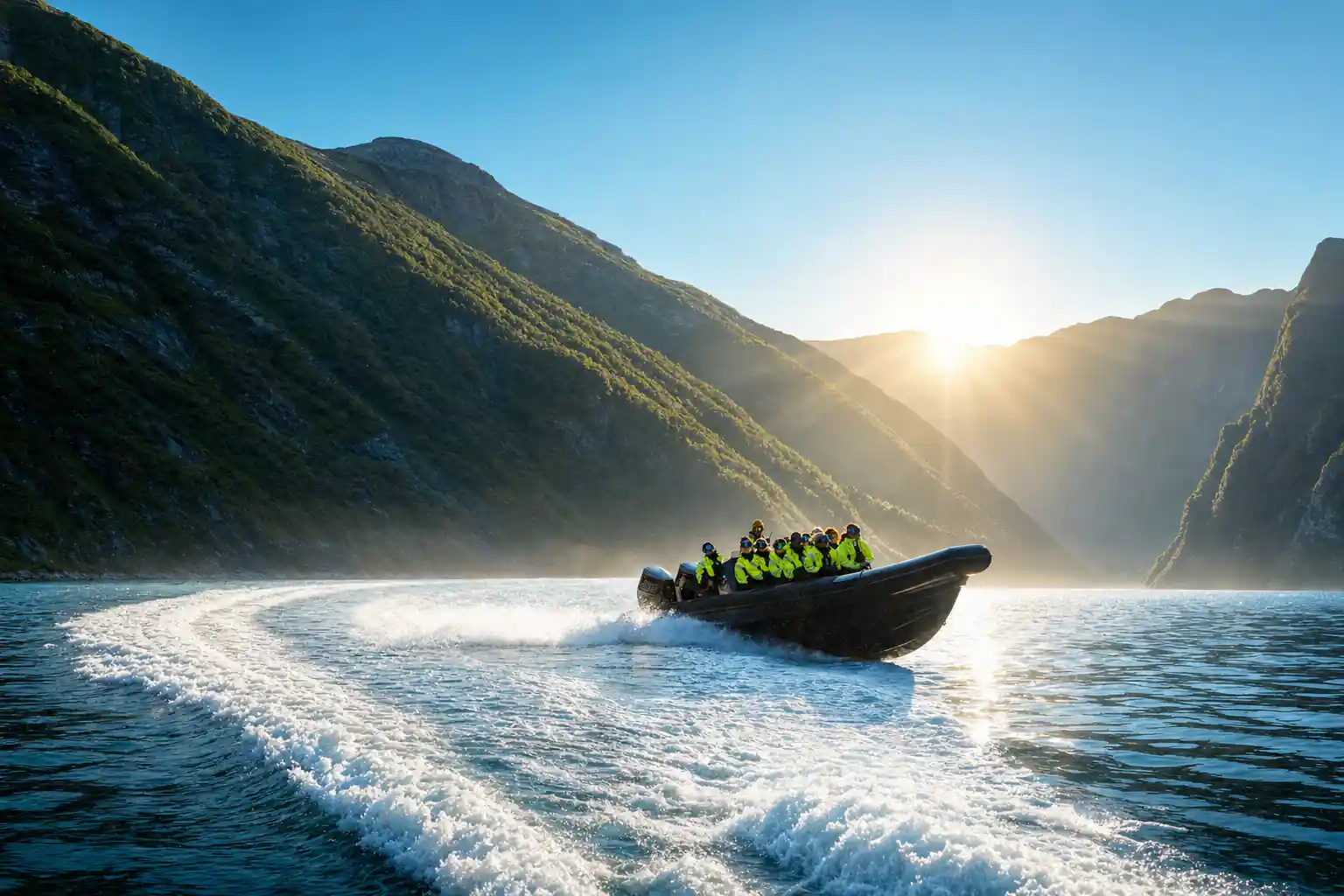
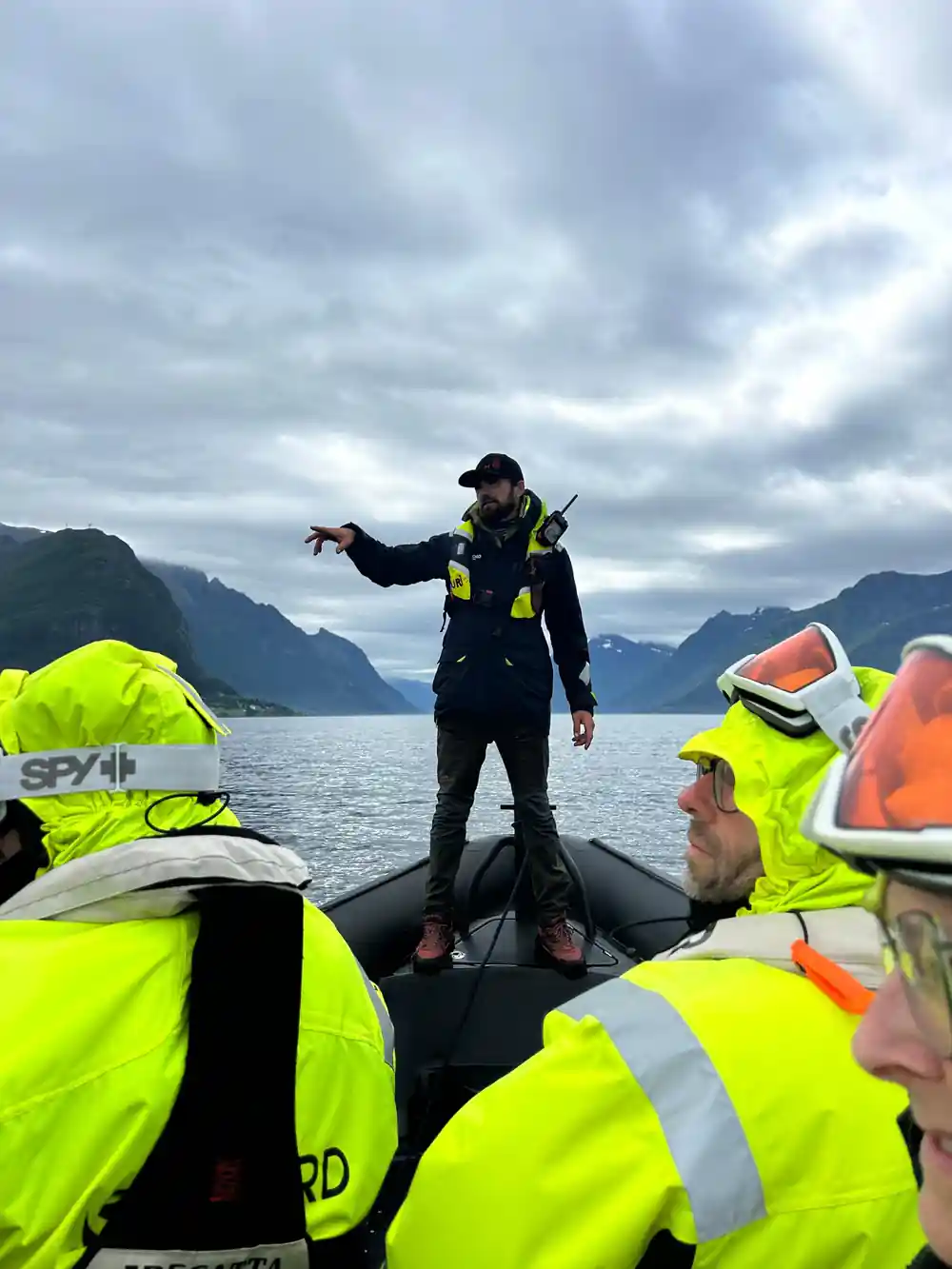
For this reason, everyone is obliged to wear a warm floatation suit, which is of course supplied by us.
A RIB boat is a working design, not just a thrill ride
Booking notes
- Listings show from prices in US dollars
- Book through the listing, where the start time and cancellation terms sit with the price
- Book ahead in the busy months, when Ålesund fills with day visitors
- Check the forecast and pack warm layers; fjord air stays cold over the water
On the water
- Follow the safety briefing and keep hands and loose items inside the tubes
- Take sunglasses; glare off the water is strong even on a grey day
- Say so if you have a bad back; RIB rides can be bumpy at speed
- Allow the full trip time: the Hjørundfjord safari runs 105 minutes[1]
What the Letters RIB Stand For
RIB stands for rigid inflatable boat, and the name tells you the two things that make the design work. There is a solid, shaped hull that carries the engine, the fuel and the people. Around the top of that hull runs a ring of air-filled tubes that gives the boat its buoyancy, its width and its stability. Take away either half and you have a different and less useful boat: a plain inflatable wallows and flexes, while a plain rigid hull needs a dock or a mooring and damages easily when it touches one.
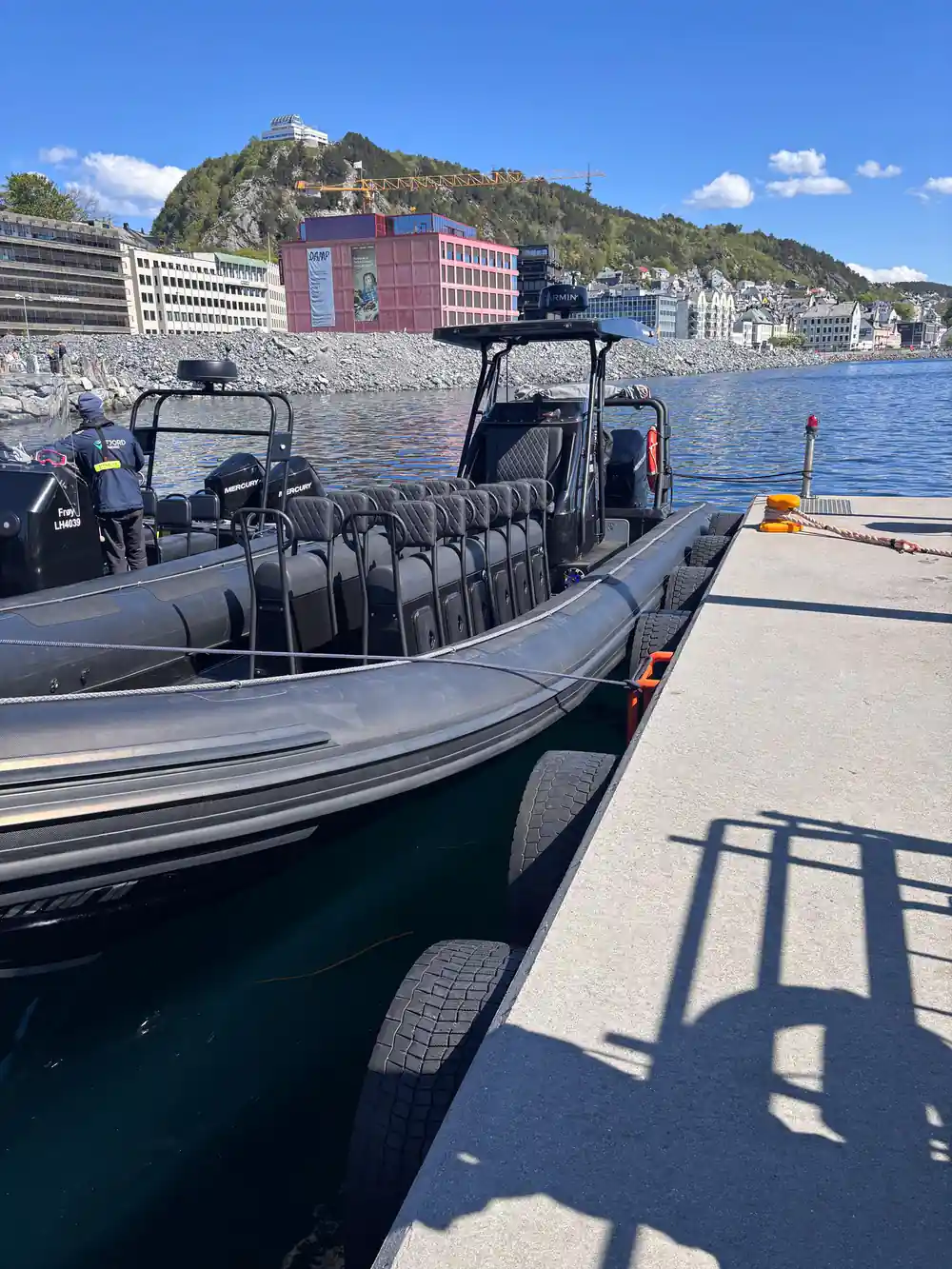
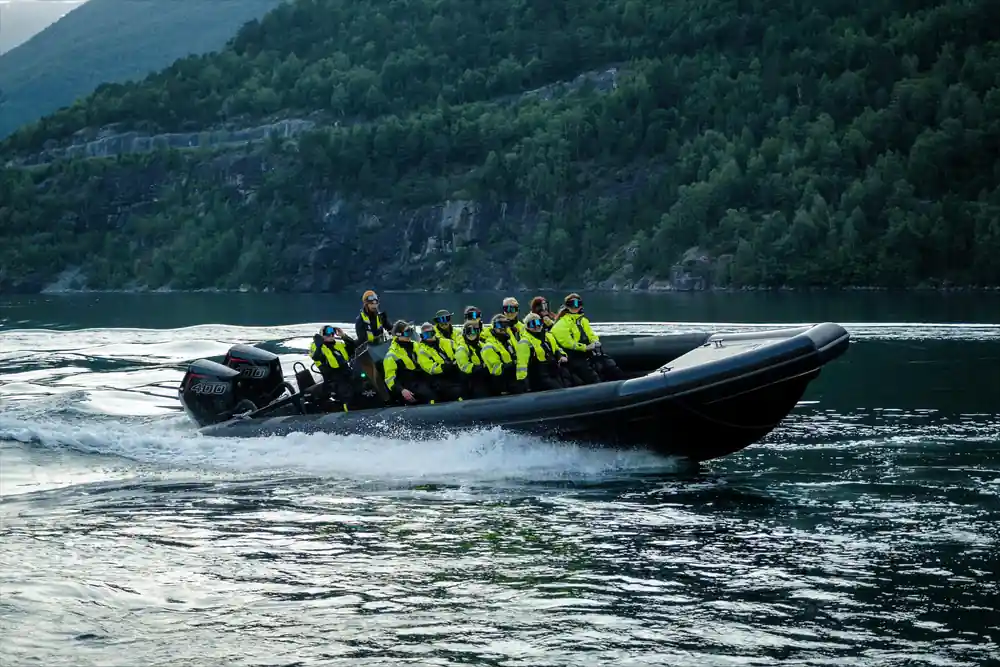
You will see the shape at almost any harbour in Norway. A RIB is usually low and open, with a jockey seat or a bench, a small console carrying the wheel and the throttle, and a fat collar of tubes wrapped around the top edge. Some are set up for diving, with tank racks and a ladder over the side. Some are working boats, running crews out to fish farms or ferrying stores across a sound. Some, like the ones running out of Ålesund, are built to take visitors into a fjord at speed, with every loose item stowed so that nothing shifts when the boat does.
The Ålesund version of the idea is the RIB Ålesund - Fjordsafari Hjørundfjord, a 105-minute ride with a live tour guide in English, rated 4.88 from 150 reviews, starting from US$157[1]. If you want something shorter to begin with, the Ålesund RIB Coastal Safari with Guide and Gear runs 1 hour and starts from US$105[3]. Both are open boats, so what you wear matters as much as what you book.
What the Inflatable Tubes Actually Do
The tubes are the reason a RIB feels so steady when it is standing still. They sit along the waterline and give the boat its buoyancy and much of its width, so two people can lean over the same side to look at something without the boat rolling them towards the water. They also provide reserve buoyancy. The tubes are divided into separate compartments, so a puncture in one of them does not put the boat down or leave it wallowing.
They are the boat's bumper as well. A RIB can come alongside a stone quay, a floating pontoon or another boat and simply press its tube against the contact point. That is the sort of touch that would scrape paint and gel coat off a solid-sided boat, and it is the reason RIBs are used as tenders for larger yachts and as working boats around docks, cages and jetties, where coming alongside is something you do several times a day.
On top of that, the raised collar knocks down a good deal of spray before it reaches the people on board. It is not a promise of dry clothes. In a chop, water still comes over the top, and the air off a fjord is cold even in high summer, so a warm layer under whatever the operator hands you is worth having. One operator, RIB-Lofoten, states that everyone on board its RIB tours is obliged to wear a warm flotation suit, which it supplies[6].
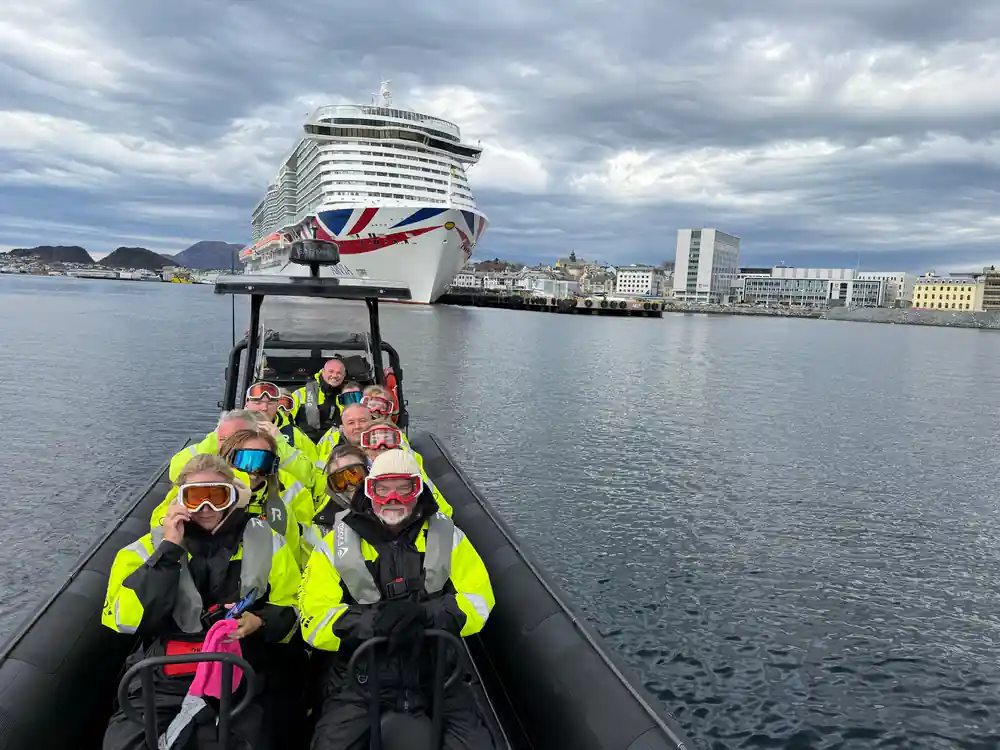
Spray flies off the tubes as a RIB turns below the Sunnmøre peaks.
Why the Rigid Hull Matters
The hull is the part that does the heavy work. It carries the engine at the stern, the console and the seats, and it takes the weight of everyone aboard. The tubes add stability and reserve buoyancy, but a RIB would not travel well on tubes alone. A soft-bottomed inflatable flexes as it moves, drags in the water and loses speed as soon as the load grows, and it cannot hold a line through choppy water the way a moulded hull can.
A RIB hull usually has a deep V running from the bow to the transom. That V cuts into chop instead of slapping across the top of it, and it gives the boat something to lean on when it turns. At rest the V sits deep and the tubes hold the boat level. Once you are moving, the hull lifts and climbs onto its own bow wave until only the after part of the bottom is still touching the water, and the ride smooths out.
There is a practical side to it too. The solid hull takes the knocks of launching and beaching, and it gives you somewhere to bolt a seat, a console, a ladder or a set of tank racks. The tubes can be repaired or replaced when they wear. That split between one hard working part and softer wearing parts keeps a RIB simple to own and straightforward to keep running through a long season. A RIB also stores and launches easily, because the whole boat fits on a trailer and can be kept out of the water between trips.
How the Design Makes It Fast
Speed comes from weight and shape together. A RIB is light for its size, because a good part of its volume is air rather than fibreglass or aluminium, and the flatter run at the back of the hull lets it rise out of the water and skim. Once a boat is planing, only a small area of the hull is wet, so the engine's power goes into forward motion instead of pushing a wall of water out of the way.
That difference shows in the timetables. The RIB safari out of Ålesund to Hjørundfjord runs 105 minutes[1], while the Hjørundfjord round trip cruise from Ålesund runs 5 hours[2]. The Fjord Tour Round Trip from Ålesund runs 5 hours as well[5]. They are different journeys along the same stretch of water, and the times make the difference in pace plain.
A fast boat also changes what a day can hold. You can leave Ålesund, run out into the fjord, stop where the view is worth stopping, and be back at the dock while the afternoon is still ahead of you. The trade is comfort. An open RIB is windier, wetter and noisier than a saloon cruiser, there is no cabin to step into when it rains, and you sit low with the water close to your shoulder for the whole run.
from US$157
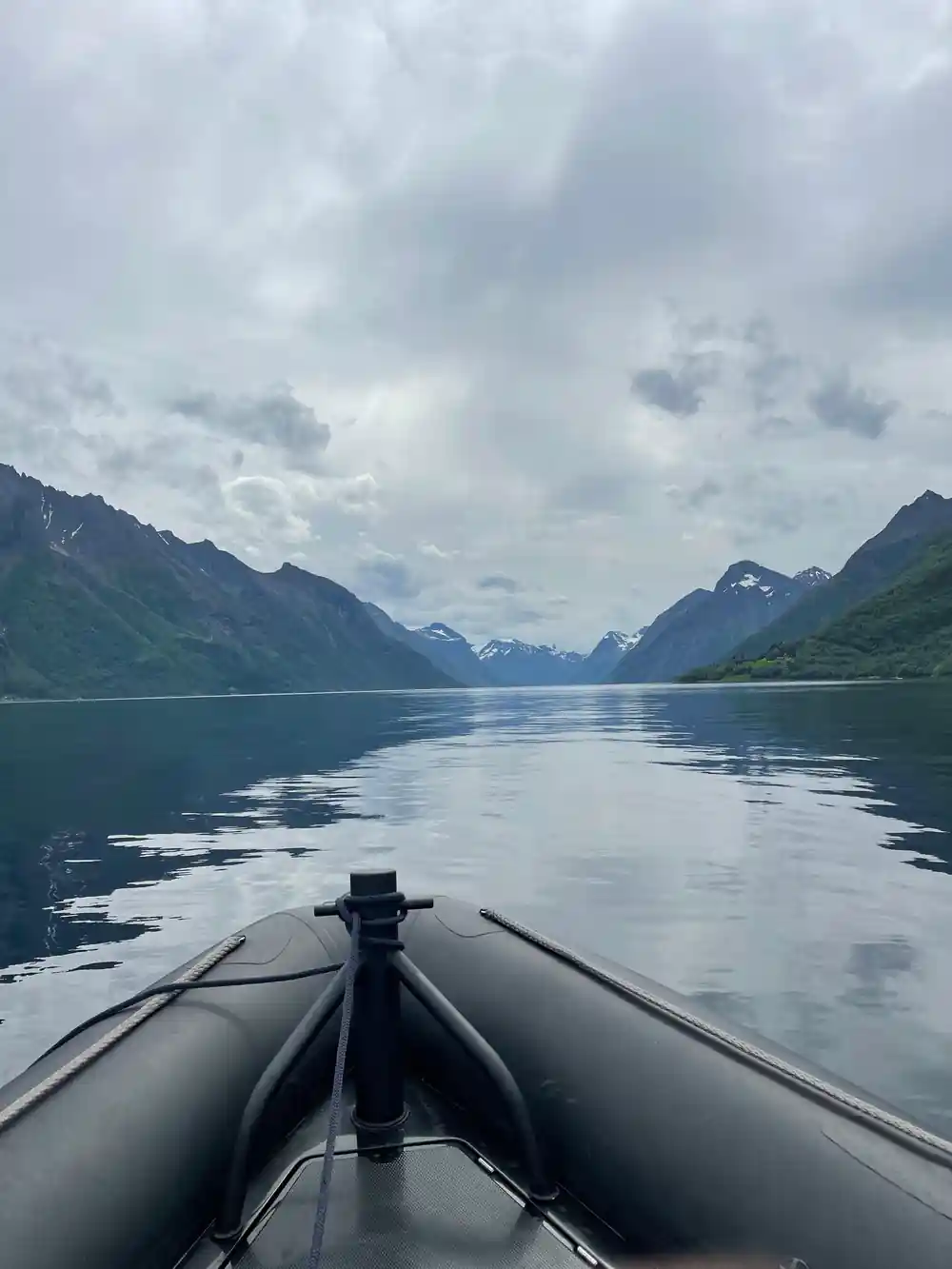
The RIB Ålesund - Fjordsafari Hjørundfjord is rated 4.88 from 150 reviews and runs 105 minutes into Hjørundfjorden[1].
Why Rescue Services Use RIBs
Rescue crews, harbour authorities and sea rescue organisations use RIBs because the design answers the problems they actually have. A RIB launches quickly from a slipway or a trailer, it can be handled by a small crew, and it can be pushed hard in conditions that would slow a heavier displacement boat. Quick launch and quick passage are usually what a rescue call needs most.
Its shallow draft lets it work close to shore, over rocks and into shallow bays where a keel boat has to stand off. Its tubes let it lie alongside a casualty, a pontoon or another vessel without doing damage, and its open deck makes it easy to reach over the side and pull someone aboard. Many RIBs are self-bailing, so water that comes over the bow drains away through the deck instead of collecting around your feet.
Cold, deep water makes all of this urgent, and rescue crews care about how fast a boat can be in the water and how fast it can reach the scene. The same qualities explain why RIBs turn up as dive boats, fish farm workboats, police patrol boats and sailing school safety boats along this coast. The design is not glamorous, but it is predictable, and predictability is what people want when the weather turns.
Why a RIB Reaches Places a Cruiser Cannot
Shallow draft is the key. A RIB can nose into a narrow arm of a fjord, tuck under a cliff, follow a shoreline close enough to see the stones under the water, and pull up beside a small beach or jetty. A large cruise ship has to stay in the main channel and send its passengers ashore in tenders, which is a slower and more formal way to arrive.
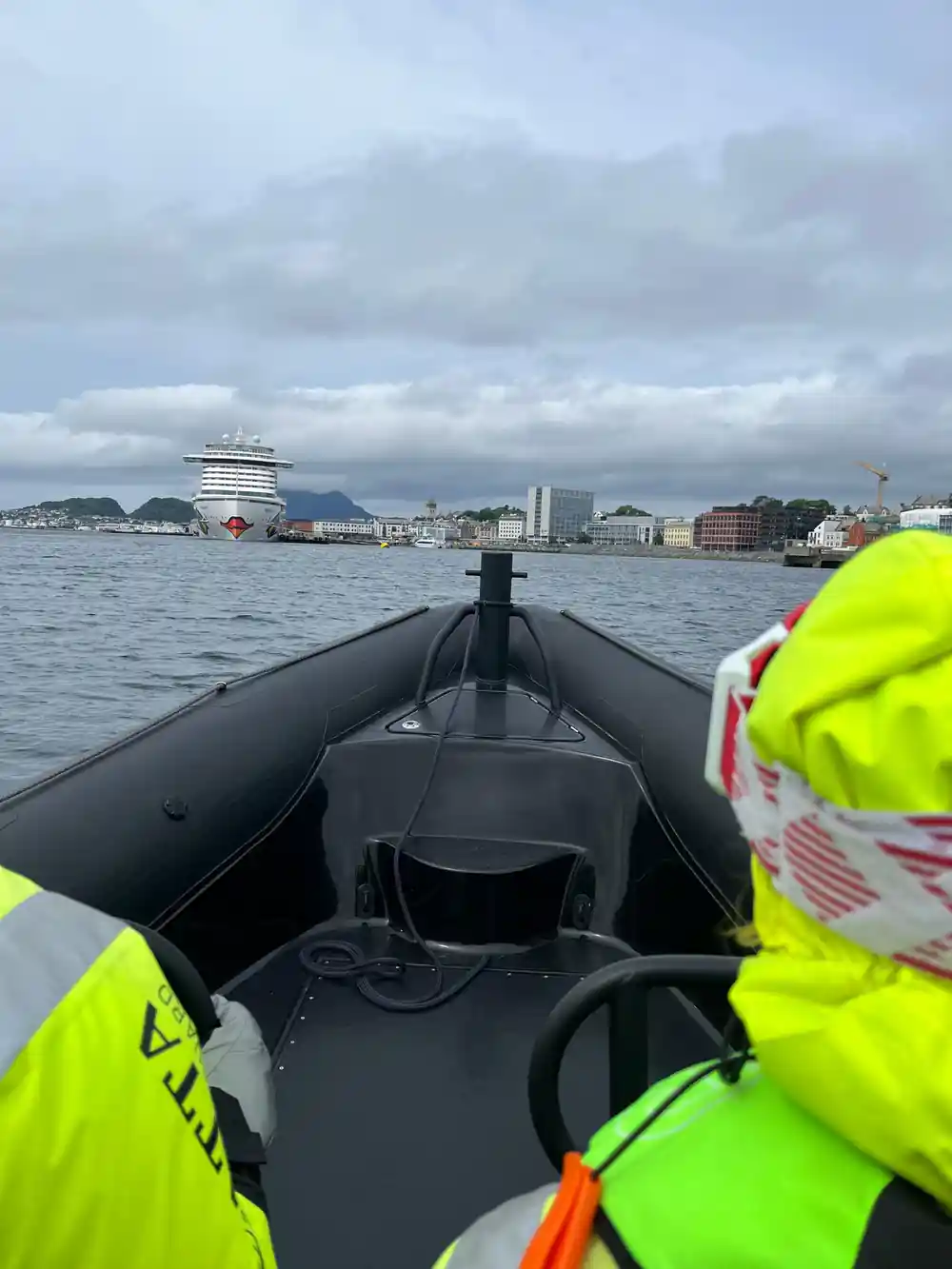
Around Ålesund that matters, because the town is made of islands and channels. Ålesund is spread across seven large islands[7], and the water between them works as the main road. On a busy day the harbour is full of ship traffic: Ålesund had 656,678 day cruise passengers in 2024, the highest number among Norwegian ports[8]. Small boats take their own line through all of it, on their own timetable.
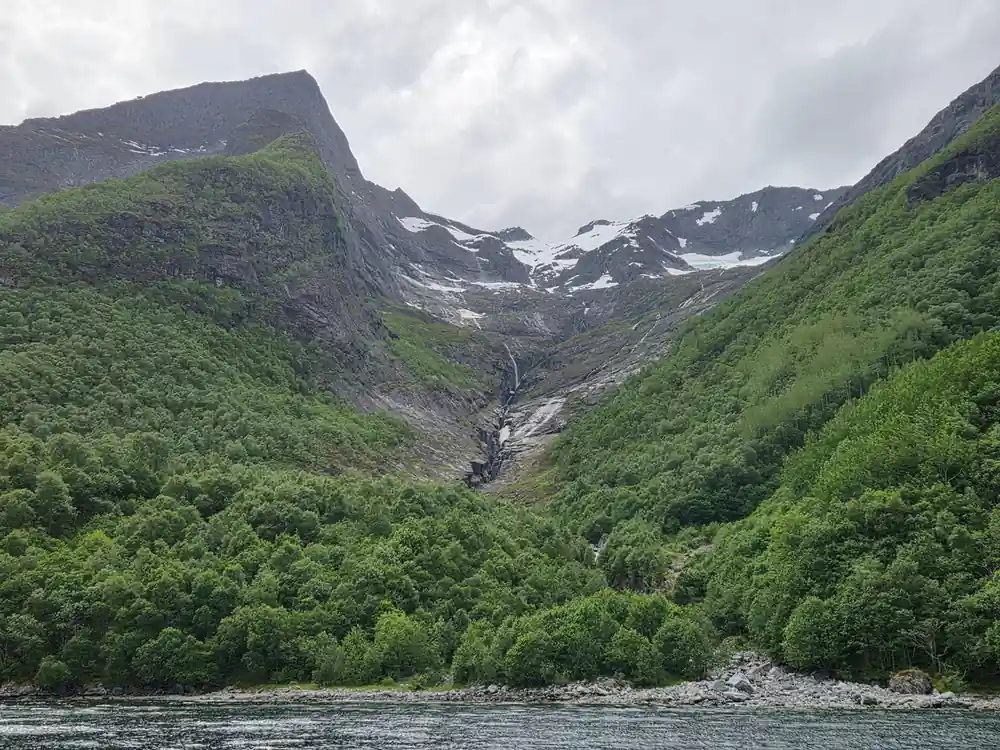
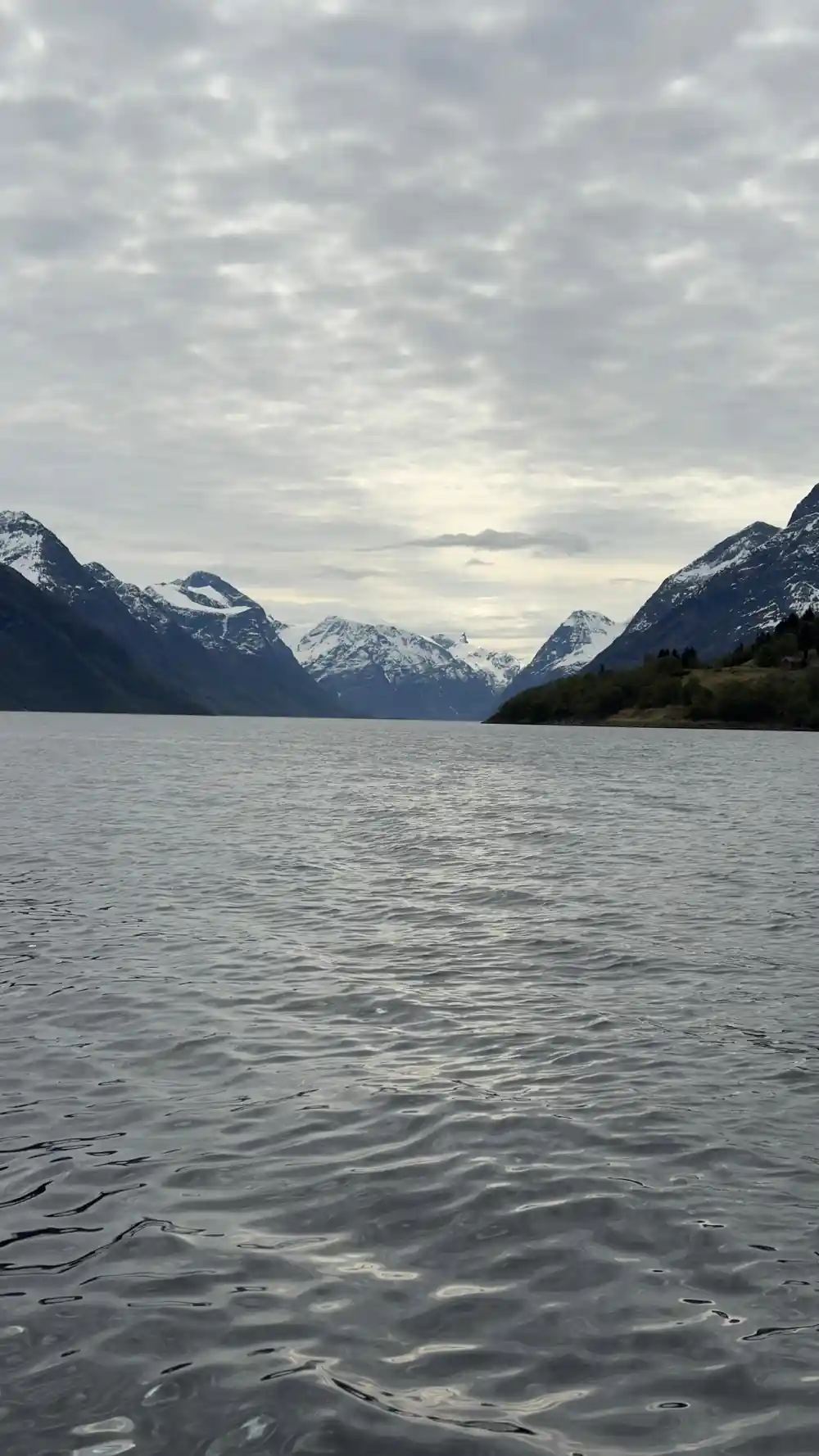
Then there is the scale of the water itself. The Storfjord, the big arm that leads towards Geiranger, is one of Norway's ten longest fjords, stretching 110 kilometres out to the Sulafjord and reaching a depth of 672 metres at its deepest[9]. The Hjørundfjord, the destination of the Ålesund RIB safari[1], cuts inland beneath the Sunnmøre Alps, and the walls come close on both sides.
How Many People a RIB Carries
Capacity depends on the boat, and the number matters more than it sounds. The Ålesund RIB Coastal Safari with Guide and Gear is a small group limited to 12 participants[3]. That is a typical size for a visitor RIB: enough people to fill the seats, few enough that everyone has a rail to hold and a clear view forward over the person in front.
Weight matters on a planing hull. Every passenger adds load, and a light boat runs flatter, turns tighter and keeps its speed better than a heavy one. It also sits higher at rest, which means less water over the tubes and a drier ride for everyone on board. Small groups help the boat stay light, and a light boat feels quicker and more direct over the same stretch of water.
If you would rather have the water more or less to yourself, there are private options in the same area, including a private Hjørundfjord cruise limited to 10 participants, from US$3667[10]. For a longer day with a stop ashore, the Fjord Tour with Lunch on MS Bruvik runs 7 hours from Ålesund to Sæbø and back, from US$156[4].
Rain in Ålesund, in millimetres
Ålesund precipitation: 1730 millimetres per year, ranging from 85 millimetres in May to 210 millimetres in December[11].
What a boat trip from Ålesund costs
From prices in US dollars for the listings shown: RIB Fjordsafari Hjørundfjord[1], RIB Coastal Safari[3], Fjord Tour Round Trip[5] and MS Bruvik fjord tour with lunch[4].
When to ride a boat from Ålesund
How a fjord RIB trip goes
Book your seat
Pick a date and check the starting time on the listing before you plan the rest of your day[1]
Meet at the dock
Arrive in good time at the harbour or the RIB centre, dressed in warm layers and ready for cold air off the water
Get kitted out
Expect a flotation suit and a briefing; RIB-Lofoten states that everyone on its tours must wear the suit it supplies[6]
Out on the fjord
The skipper opens the throttle, the hull planes and the tubes lift clear, with Hjørundfjorden as the destination[1]
Back at the dock
Suits off, photos compared; free cancellation on the listing runs up to 24 hours in advance[1]
Ride a RIB into Hjørundfjord from Ålesund
from US$157Reserve now & pay later