Worth remembering
- RIB Ålesund - Fjordsafari Hjørundfjord runs for 105 minutes from US$157, and it is rated 4.88 from 150 reviews.[1]
- The white-tailed eagle is the headline sighting along these fjords, and it is the one you have the best chance of meeting on a RIB run.
- Harbour porpoises show for a second at a time, so calm water and a slow sweep of the eyes matter more than luck.
- Treat a whale as a surprise rather than a plan, and let the birds, the cliffs and the ride carry the day.
- Ålesund gets 1730 millimeters of precipitation a year, from 85 millimeters in May to 210 millimeters in December.[2]
| Fjordsafari RIB | Coastal RIB safari | Hjørundfjord cruise | |
|---|---|---|---|
| From | from US$157[1] | from US$105[3] | from US$115[4] |
| Time on the water | 105 minutes[1] | 1 hour[3] | 5 hours[4] |
| Route | Hjørundfjorden[1] | Uteguiden.com - Alesund RIB Centre[3] | Hjørundfjorden, Øye, Ålesund[4] |
| Guide | Live tour guide: English[1] | Live tour guide: English[3] | Live tour guide: English[4] |
| Cancellation | Free up to 24 hours in advance[1] | Free up to 24 hours in advance[3] | Free up to 24 hours in advance[4] |
For this reason, everyone is obliged to wear a warm floatation suit, which is of course supplied by us.
Is the Fjordsafari RIB worth booking?
Before you sail
On the water
- Keep the flotation suit zipped and follow the skipper's brief.
- Wool or fleece underneath, plus gloves and a hat.
- Sunglasses cut the glare that hides porpoise fins.
- Sit where you are told and keep your hood down so you can hear.
Start with what is guaranteed
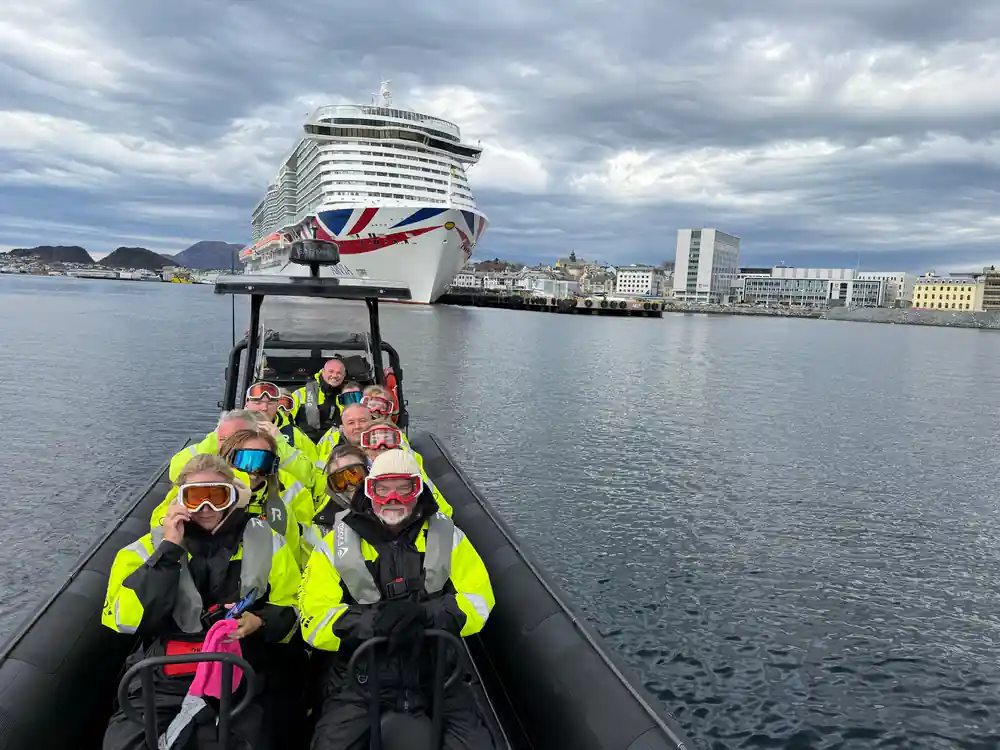
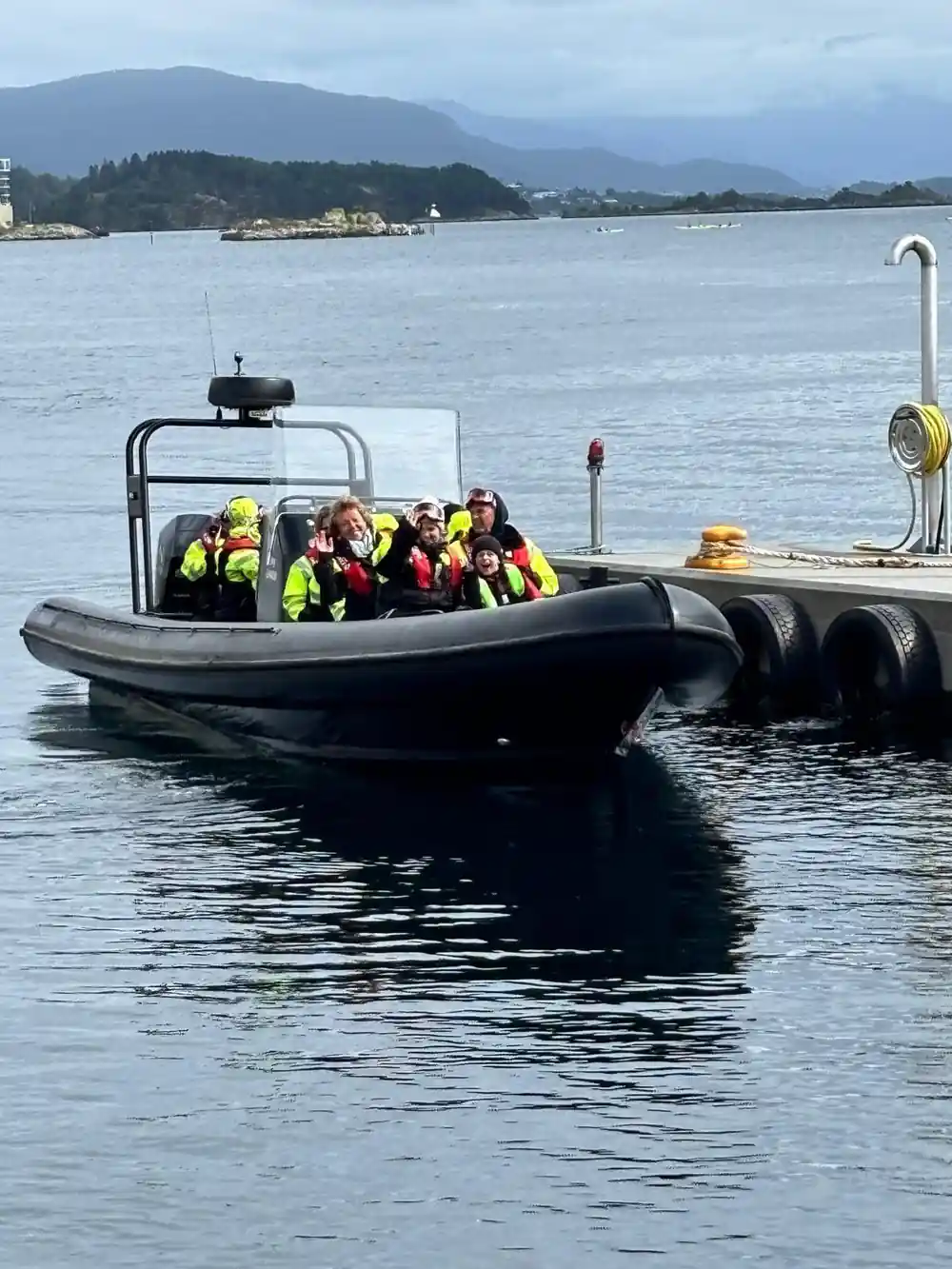
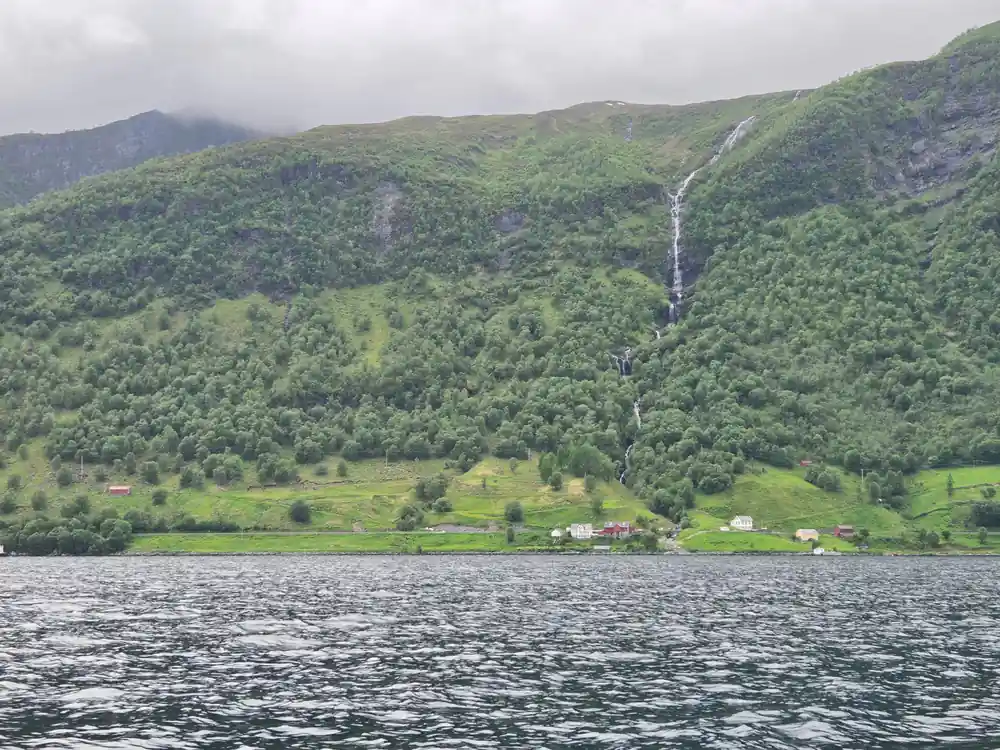
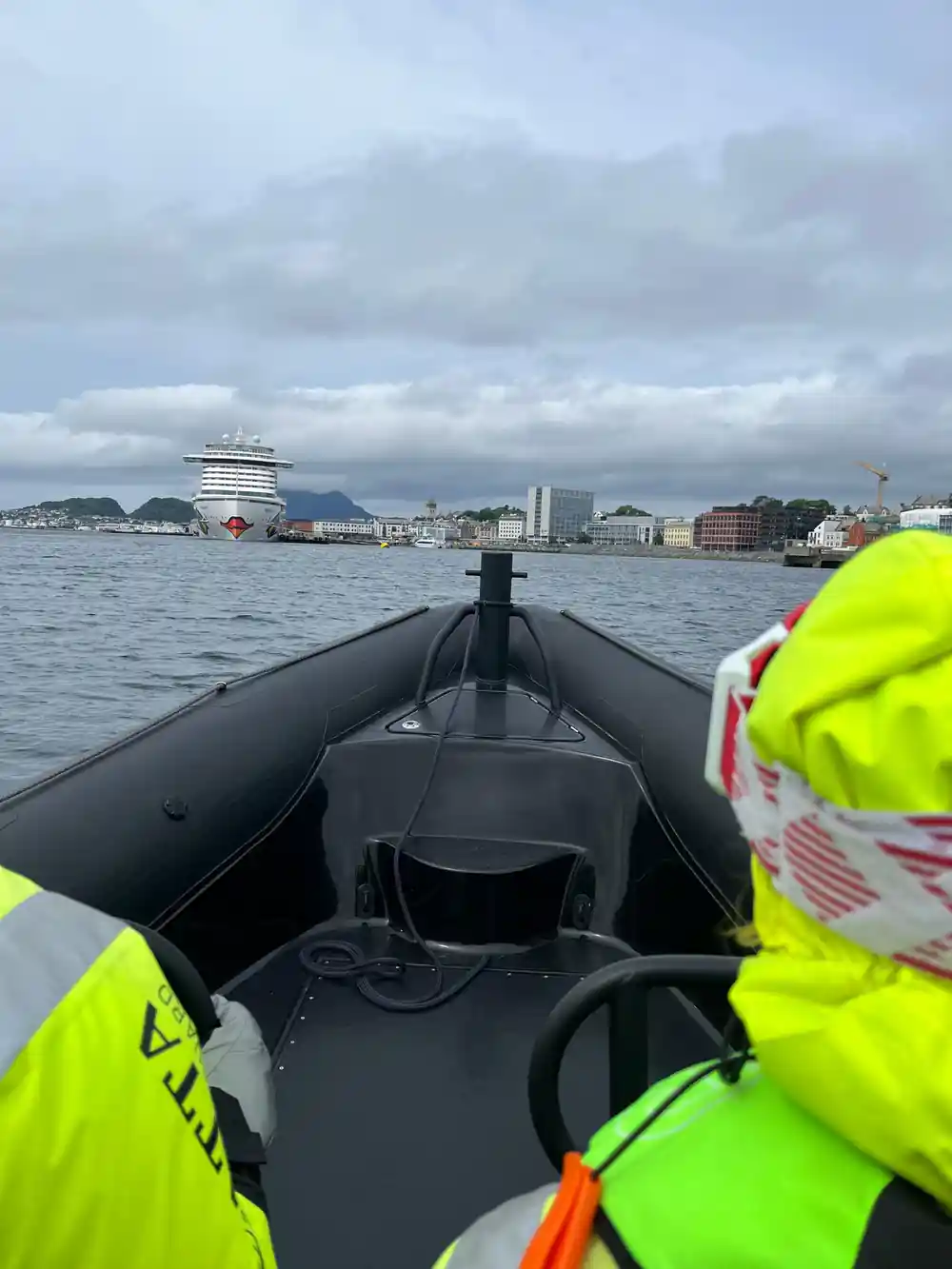
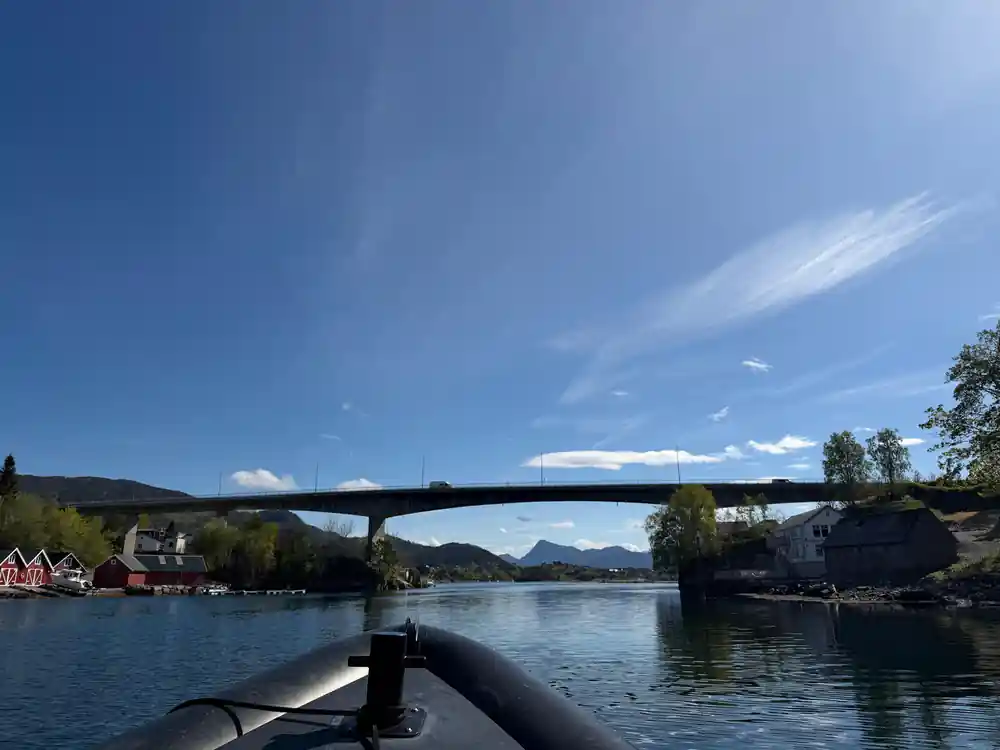
Any honest Ålesund wildlife sea safari starts with the same bargain: the boat, the fjord and the ride are certain, and the animals are not. The trip booked from this site, RIB Ålesund - Fjordsafari Hjørundfjord, runs for 105 minutes with a live English-speaking guide, from US$157, and it is rated 4.88 from 150 reviews.[1] You set off from a town spread across seven large islands and run into fjord country where the walls climb straight out of dark green water.[5]
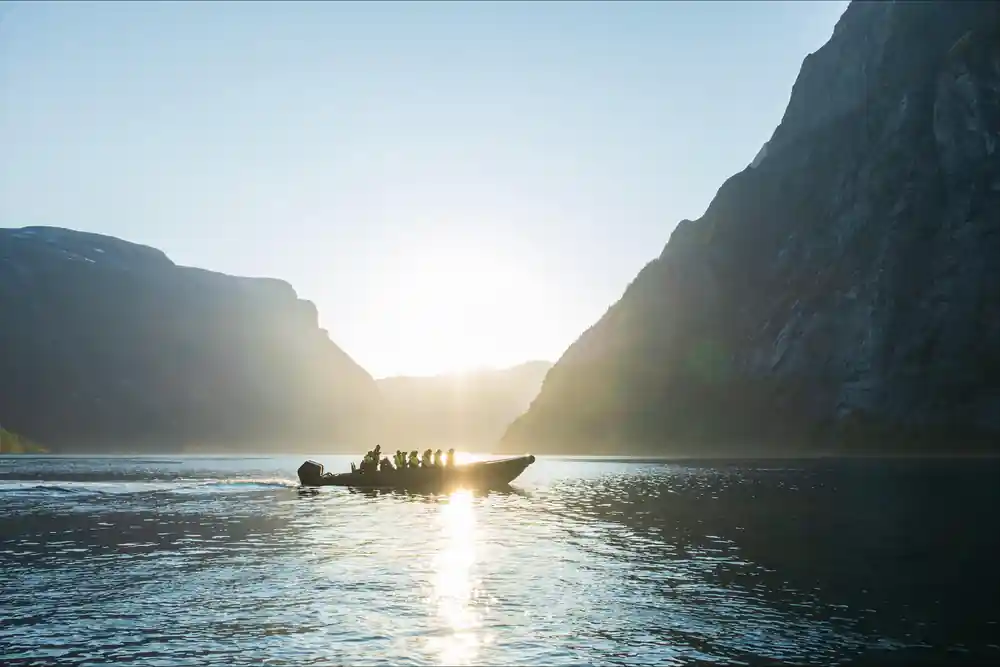
So plan around the part you are sure of. An open RIB at speed is cold, loud and exhilarating, and the scenery changes every few minutes: a wide channel one moment, a cliff face you could almost touch the next. If you want a shorter first taste of RIB water, the RIB Coastal Safari with Guide and Gear takes 1 hour from US$105, in a group limited to 12 participants.[3] The Fjordsafari can be reserved now and paid for later, with free cancellation up to 24 hours in advance for a full refund.[1]
The white-tailed eagle
The white-tailed eagle is the bird most people hope for, and it is the one that most often delivers. It is a huge, heavy-bodied eagle, brown through the body with a pale head and a short white tail, and it lives along these fjords all year. You will usually meet it in one of two ways: as a shape sitting on a rock or a low branch by the water, or as a slow, level glide along a cliff line. Nothing about it is quick or fussy, and it rarely seems bothered by a boat passing below.
Look for a shape rather than a movement. Eagles perch for long stretches, so the first sign is often a dark lump on a skerry that was not there on the way out. When one lifts off, the wings look like planks, and it tends to fly low and level rather than soaring high overhead. Skippers who run these fjords know the local territories, and they will usually slow down or turn so that everyone on board gets a look. If you are photographing, keep the camera up and the shutter speed high.
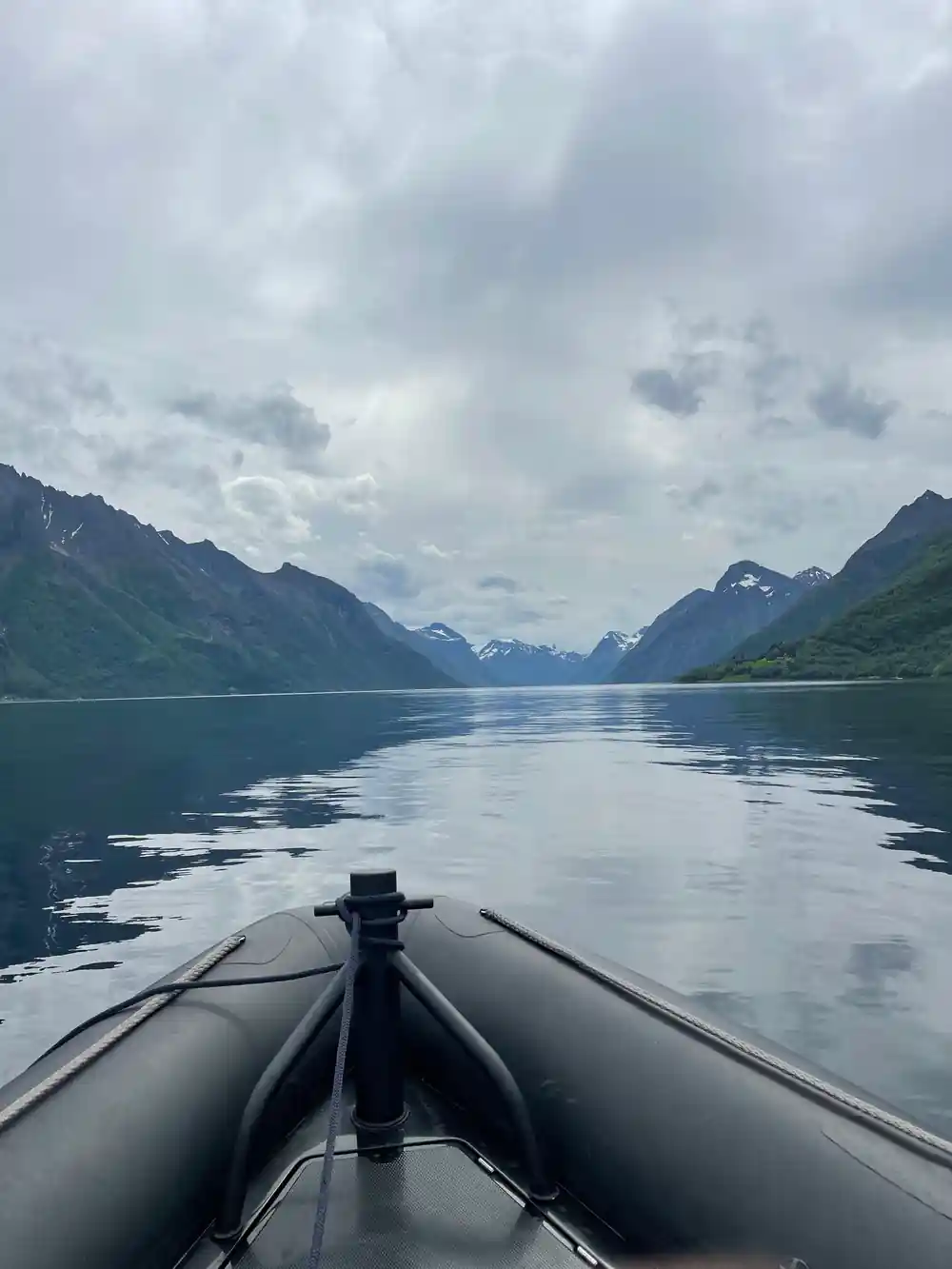
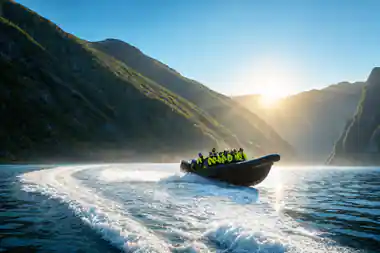
Spray flying as the RIB turns beneath the Hjørundfjord walls.
Porpoises, and why you might miss one
Harbour porpoises live in these waters, but they are nothing like the dolphins people picture. They are small, dark and round-headed, with a low triangular fin, and they surface for a second or two at a time without jumping or splashing. On a calm day you may see a fin roll through the water and then nothing at all. On a choppy day the same animal is almost impossible to spot.
The usual reason for missing one is that you were watching the cliffs. Porpoises show best against flat, glare-free water, so sweep your eyes across the middle distance now and then instead of only along the shore. They rarely come to the boat, so do not wait for company alongside; a brief roll is often the whole encounter. If the skipper throttles back or points, look where the finger goes rather than where you think it should be.
The seabirds you will definitely see
Birds are the safest bet of the day. Gulls follow the boat, cormorants and shags dry their wings on low rocks, oystercatchers pipe from the shoreline, and terns work the shallows. In the Hjørundfjord, birdlife is part of the scenery rather than a separate event, and it fills the quiet stretches between bigger sightings. Even a still afternoon on the water has something moving over it.
Take the birds seriously and the day rarely feels empty. A mixed flock feeding over one patch of water is worth watching, and where small fish gather, larger animals often follow. Binoculars help if you can hold them steady, but a camera with a little reach does more good than heavy magnification on a fast, moving boat. If you would rather meet the fish than watch the birds, the guided fishing trip with fresh fish tasting runs for 4 hours, from US$221.[6]
from US$157
RIB Ålesund - Fjordsafari Hjørundfjord runs for 105 minutes with a live English-speaking guide and is rated 4.88 from 150 reviews.[1]
Why whales are the wrong expectation
Ålesund sits in fjord and coastal water rather than on one of Norway's whale grounds, so a whale here is a genuine surprise and not a target. Setting out to see one turns a good trip into a disappointment. Setting out to see eagles, seabirds and the landscape turns a porpoise or a seal into the story you tell afterwards. Seals are the likelier bonus: they haul out on low skerries and watch passing boats with what looks like total indifference.
If you want a close look at marine life that does not depend on luck, Atlanterhavsparken, the Atlantic Sea Park, is considered one of Northern Europe's largest and most unique saltwater aquariums, and it makes a sensible wet-day plan.[7] Otherwise, enjoy the fjord for what it is: deep, cold, quiet water where the big animals are elsewhere and the birds and small cetaceans do the work.
When the odds are best
Calm, bright conditions help more than any particular season. Flat water shows a fin or a diving bird clearly, and low morning light lifts the cliffs out of the haze. Ålesund is a wet place by any measure, receiving 1730 millimeters of precipitation a year, from 85 millimeters in May to 210 millimeters in December, so build rain into your expectations rather than your plans.[2] The water you cross belongs to a big system: the Storfjord is one of Norway's ten longest fjords, stretching 110 kilometers out to the Sulafjord and reaching a depth of 672 meters at its deepest.[8]
The town gets busy when the ships are in. Ålesund had 656,678 day cruise passengers in 2024, the highest number among Norwegian ports.[9] If you want the streets closer to yourself, early mornings are your friend. On land, the Aksla viewpoint is reached by a stone staircase of 418 steps, and the town was founded in 1838 and rebuilt in Jugendstil (Art Nouveau) after a fire.[10][11][12]
What you can do to help your own chances
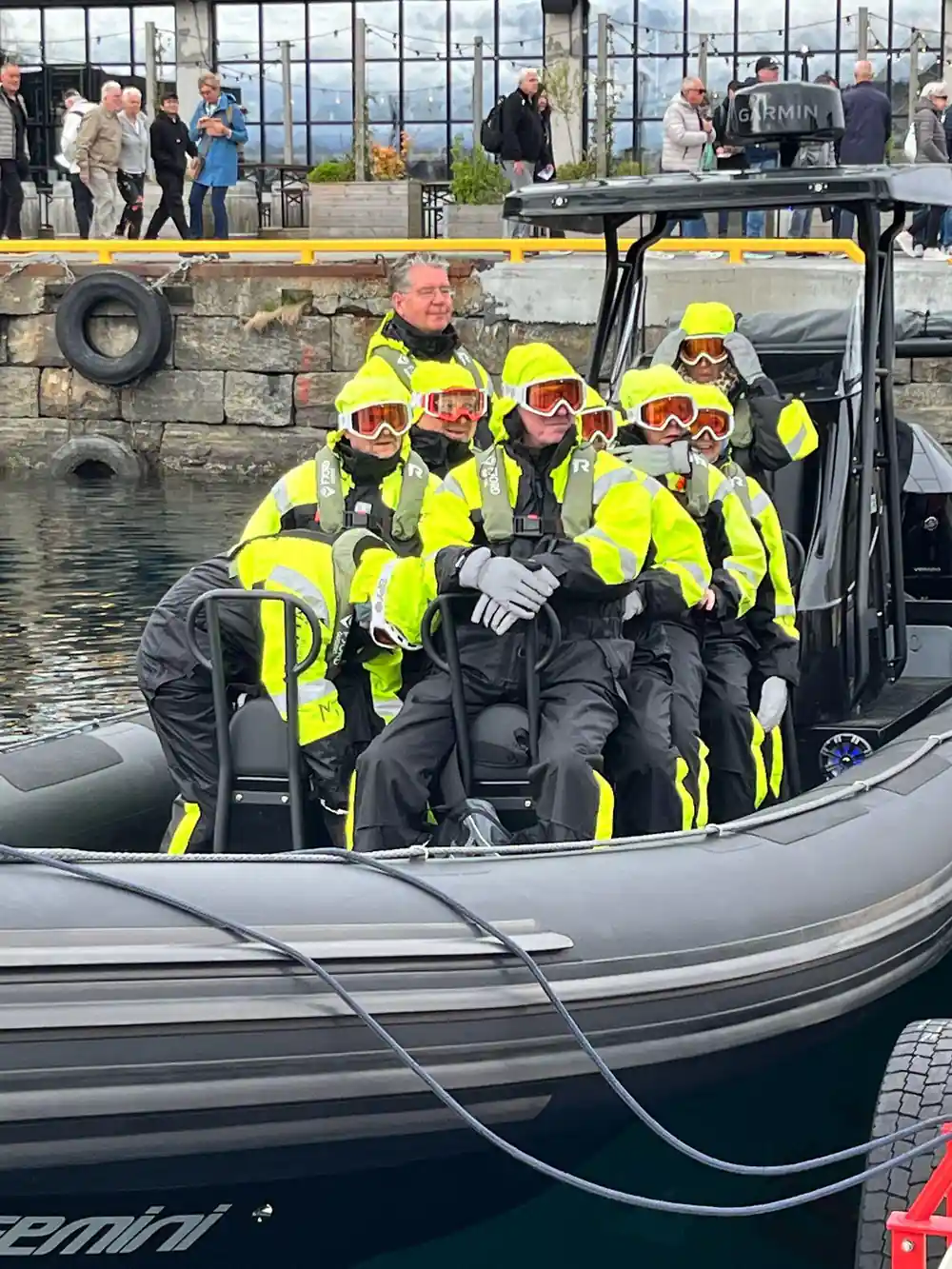
Wear what you are given, and wear it properly. Norwegian RIB operators treat cold water seriously: on RIB-Lofoten's tours above the Arctic Circle, everyone on board is obliged to wear a warm flotation suit, which the operator supplies.[13] Underneath, go for wool or fleece, gloves, a hat and sunglasses; spray and wind do most of the cooling on an open boat.
Then use your eyes well. Sit where the guide puts you, keep your hood down so you can hear, and scan in slow sweeps rather than darting about. Ask what has been seen that day and which side of the boat to watch. Put the phone away for the fast stretches; on a RIB, the best moments last about as long as it takes to raise a camera. And if the day gives you nothing but weather and cliffs, that is still a fair trade for two hours on the Hjørundfjord.
From-prices for fjord and wildlife trips
Values are from-prices: from US$105[3], from US$157[1], from US$115[4], from US$221[6].
From-prices for a day on the water
Amounts are from-prices per person in US dollars: from US$157[1], from US$105[3], from US$115[4], from US$221[6]. No separate child rate is given.
When to book and when to go
How to plan a sea safari
Book before you arrive
The Fjordsafari Hjørundfjord runs for 105 minutes and starts from US$157.[1]
Choose a calm morning
Flat water makes fins and diving birds easier to see, and the fjord is usually quieter early in the day.
Layer up under the suit
Wool or fleece, gloves, a hat and sunglasses; you are sitting in an open boat at speed.
Scan the cliff line
Most eagle sightings start with a perched shape or a slow, heavy glide rather than something overhead.
Ask the skipper
Guides know the local territories and the day's conditions, so ask where to look and which side to watch.
Ready to see the Hjørundfjord at RIB speed?
from US$157Reserve now & pay later