Worth remembering
- RIB Ålesund - Fijordsafari Hjørundfijord lasts 105 minutes and starts from US$157 per person.[1]
- The tour is rated 4.88 from 150 reviews, with a live English-speaking guide.[1]
- Reserve now and pay later, and cancel up to 24 hours in advance for a full refund.[1]
- On RIB-Lofoten's tours, everyone is obliged to wear a warm floatation suit supplied by the operator.[2]
- Alesund receives 1730 millimeters of precipitation per year, from 85 millimeters in May to 210 millimeters in December.[3]
| Hjørundfijord RIB | Fijord cruise round trip | RIB Coastal Safari | |
|---|---|---|---|
| From | from US$157[1] | from US$115[4] | from US$105[5] |
| Duration | 105 minutes[1] | 5 hours[4] | 1 hour[5] |
| Rating | 4.88 from 150 reviews[1] | 4.22 from 60 reviews[4] | 4.87 from 8 reviews[5] |
| Group | Live guide in English[1] | Wheelchair accessible[4] | Limited to 12 participants[5] |
| Stops | Hjørundfijorden[1] | Hjørundfijorden, Øye, Ålesund[4] | Alesund RIB Centre[5] |
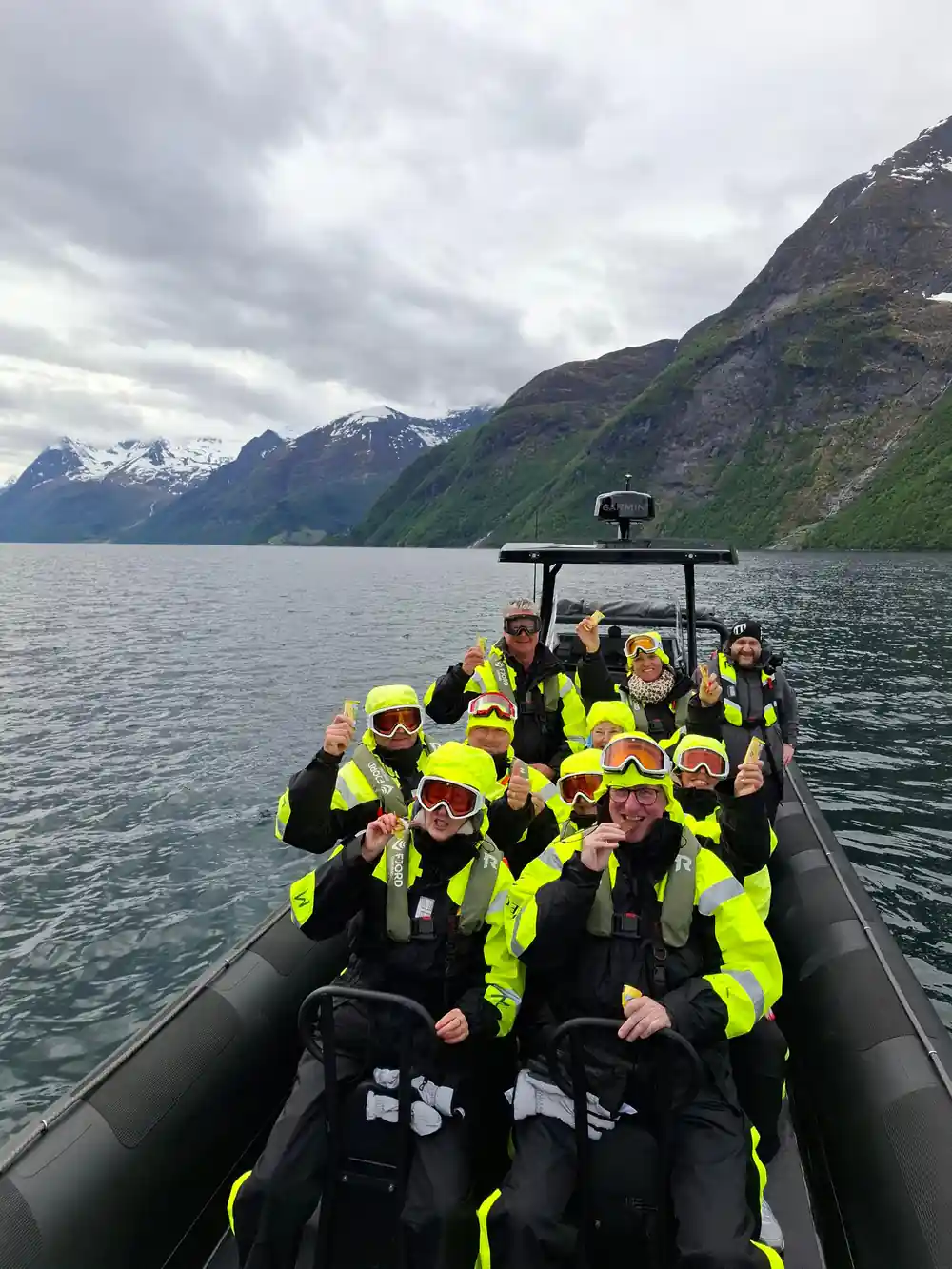
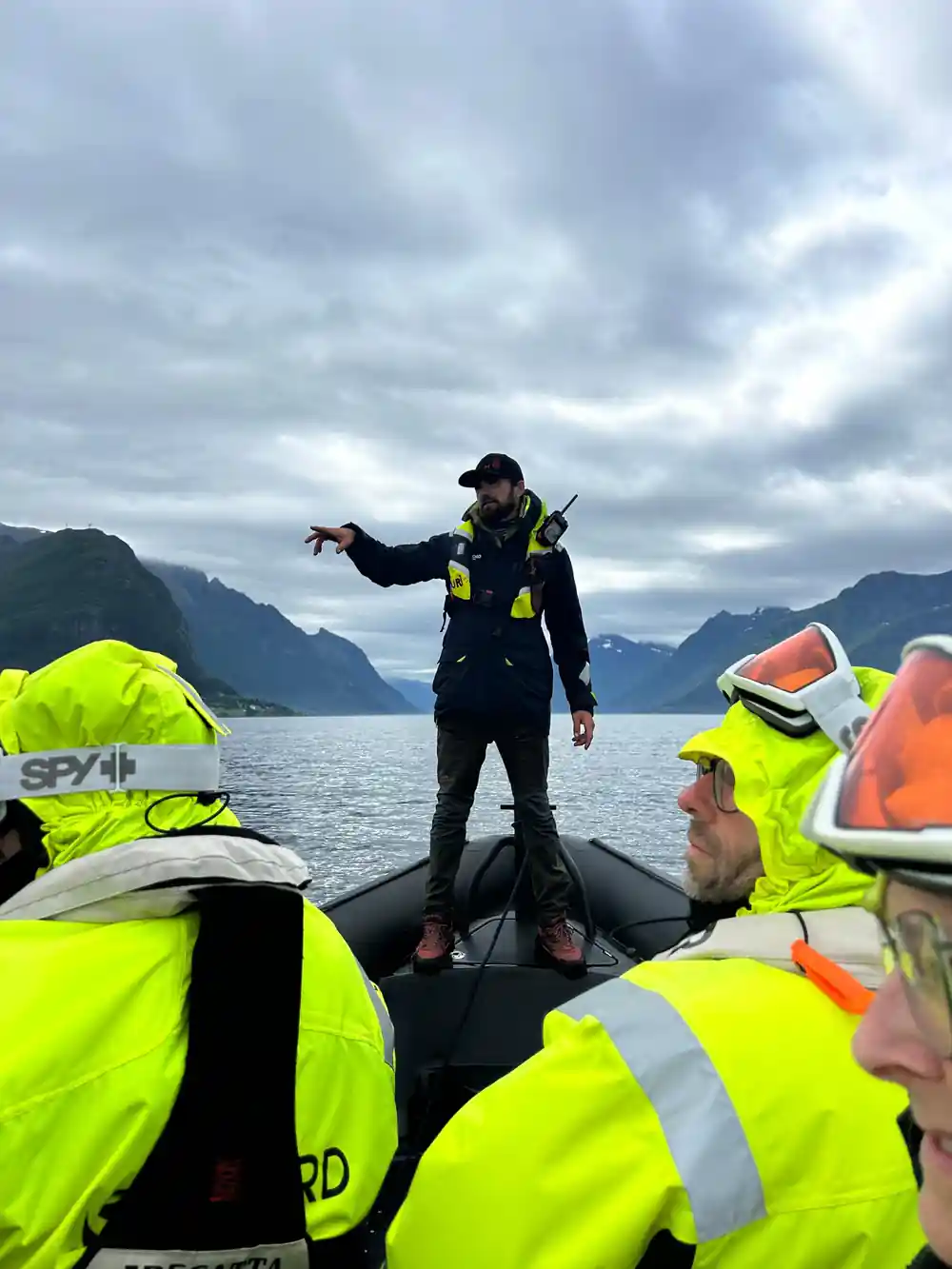
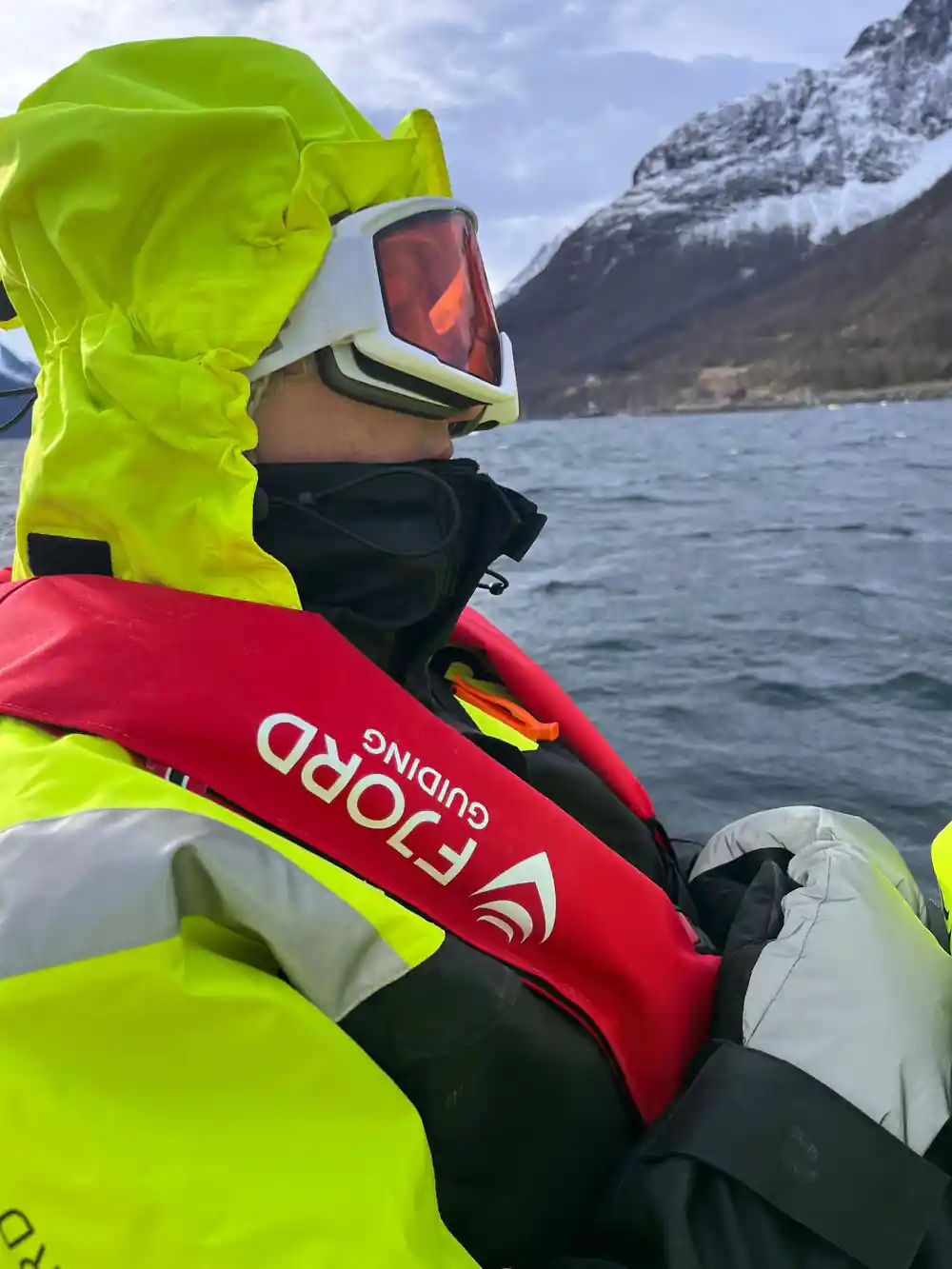
For this reason, everyone is obliged to wear a warm floatation suit, which is of course supplied by us.
A fast, wet, thrilling Hjørundfijord ride
What to wear and bring
- Warm thermal base layer under your clothes
- Waterproof gloves and a hat that stays on
- Sunglasses to cut spray and glare
- A dry bag or waterproof phone pouch
What the first two minutes feel like
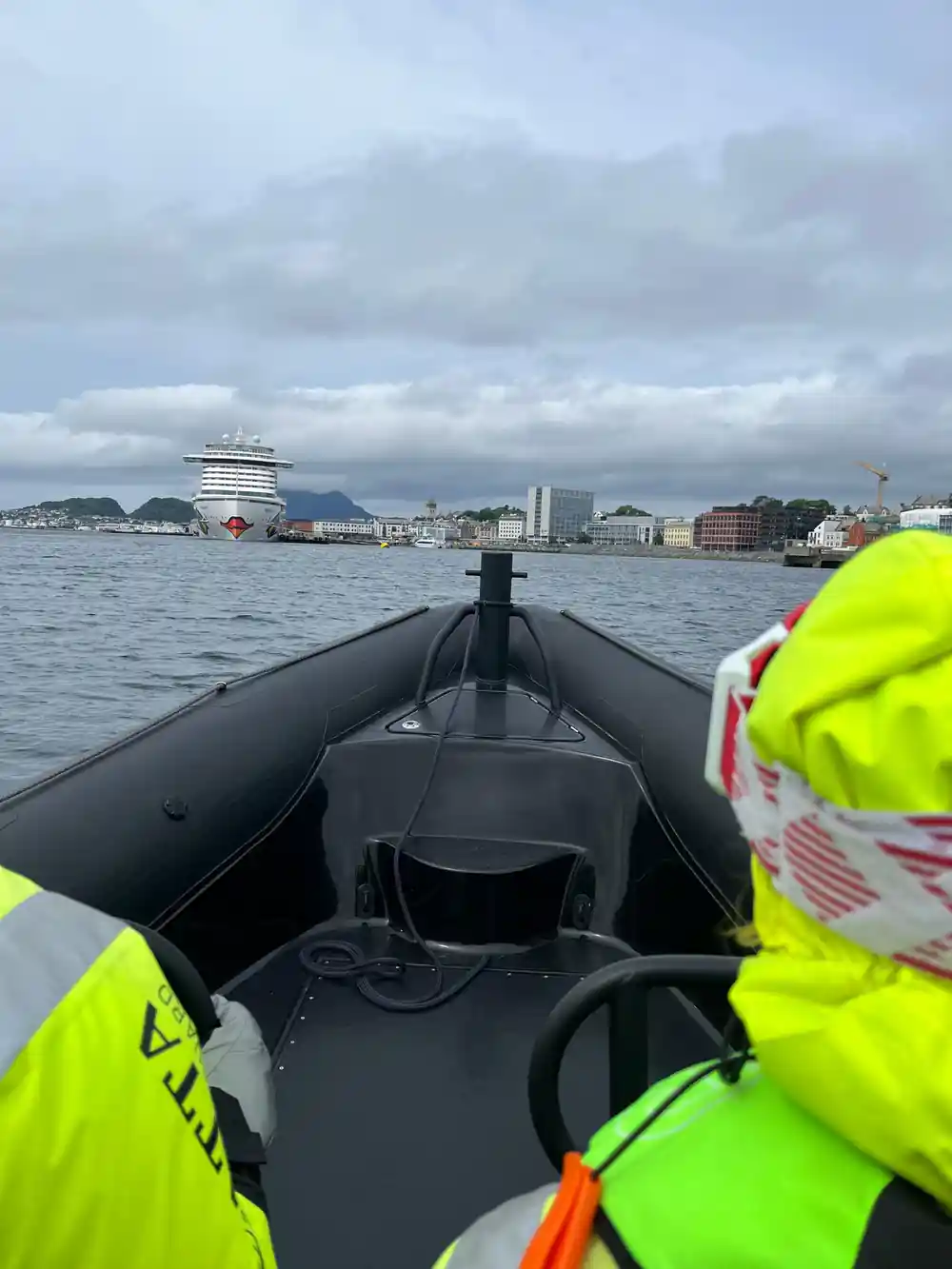
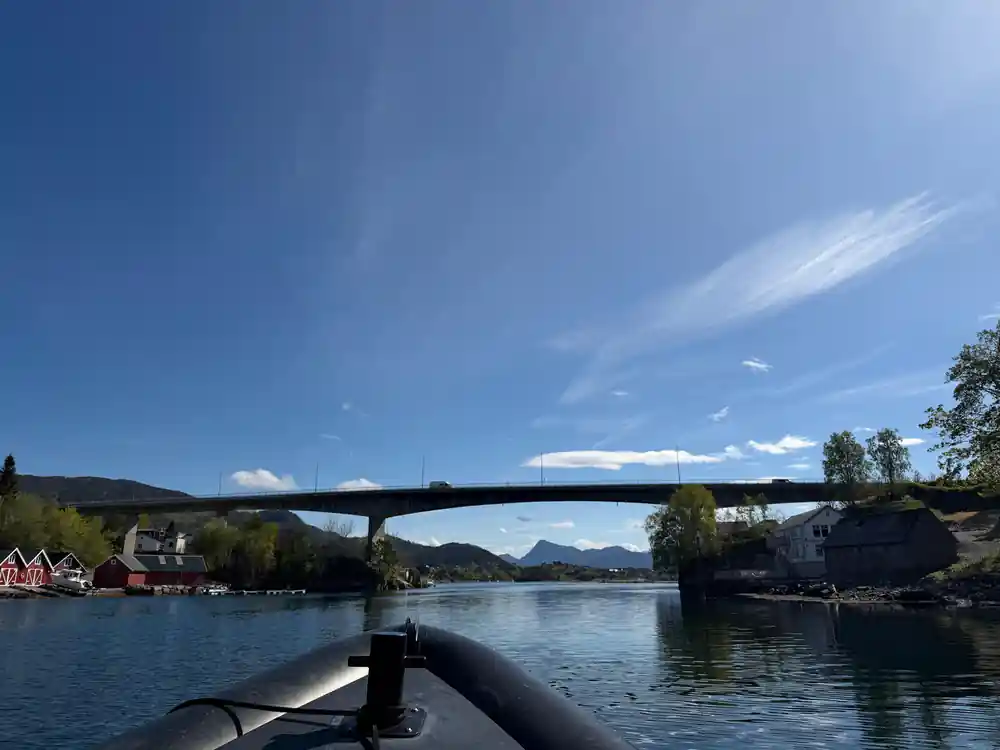
The RIB Ålesund - Fijordsafari Hjørundfijord lasts 105 minutes and starts from US$157 per person.[1] The first minutes are calm. You step aboard at the dock, find a seat, and listen to the guide run through the safety briefing. Ålesund is spread across seven large islands.[6] The boat often threads past low skerries and island shoulders before the open water begins. The harbour is sheltered, the engine is only idling, and you can still hear voices and seagulls.
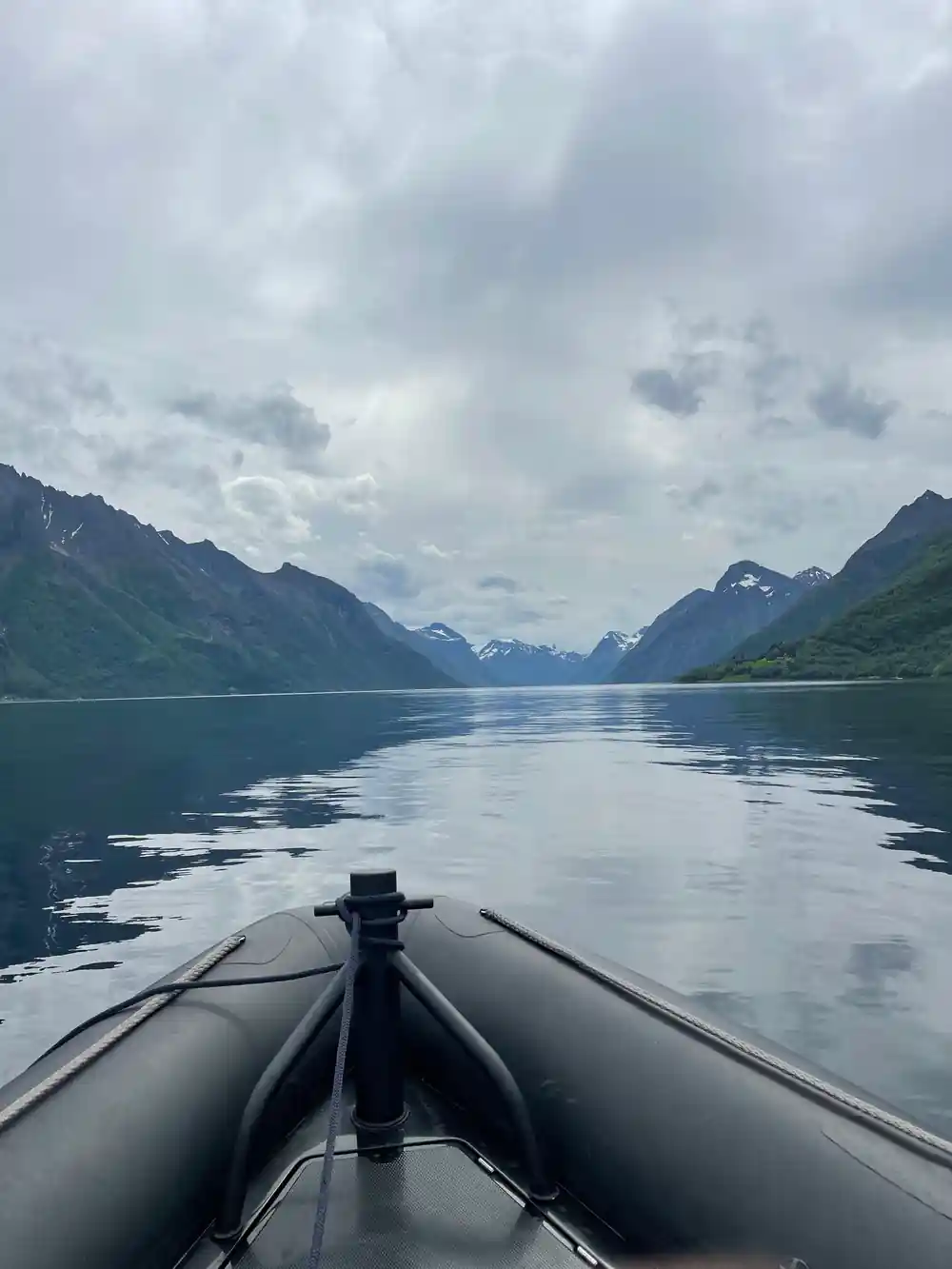
Then the throttle opens. The bow lifts, the wind hits your face, and the world narrows to the strip of water ahead. Spray can flick up over the side on a turn or when the hull meets a chop. The tour stops at Hjørundfijorden, where the mountains rise straight from the water.[1] You do not need to be an experienced boater. You do need to hold on, follow the guide, and keep your camera inside its dry bag until the boat slows.
The change is sudden. One moment you are in harbour calm, the next the engine note deepens and the boat rises onto plane. The water turns into a blur of grey and green, and the mountains seem to step closer. Your first instinct may be to laugh. Your second may be to check your hat. Both are normal. The guide will watch the group and slow down if anyone needs a break.
The suit, and why it is the whole trick
A RIB ride is not a normal boat trip. You are low to the water, open to the sky, and moving fast enough that the air feels colder than it did on the dock. On RIB-Lofoten's tours, everyone on board is obliged to wear a warm floatation suit, which the operator supplies.[2] That suit does two jobs at once: it keeps you afloat if you go in, and it blocks wind and spray so you stay warm. A good suit turns a cold, wet ride into something you can relax into.
Under the suit, dress as if for a cold, windy walk. Start with a thermal base layer, add fleece or wool, and avoid cotton next to your skin. The area receives 1730 millimeters of precipitation per year, ranging from 85 millimeters in May to 210 millimeters in December.[3] Rain and spray are part of the picture. A hat, thin gloves and a neck gaiter make a bigger difference than you might expect. If you wear glasses, a strap helps. If you have a hood, tuck it in or choose a hat instead. A flapping hood is noisy and annoying at speed.
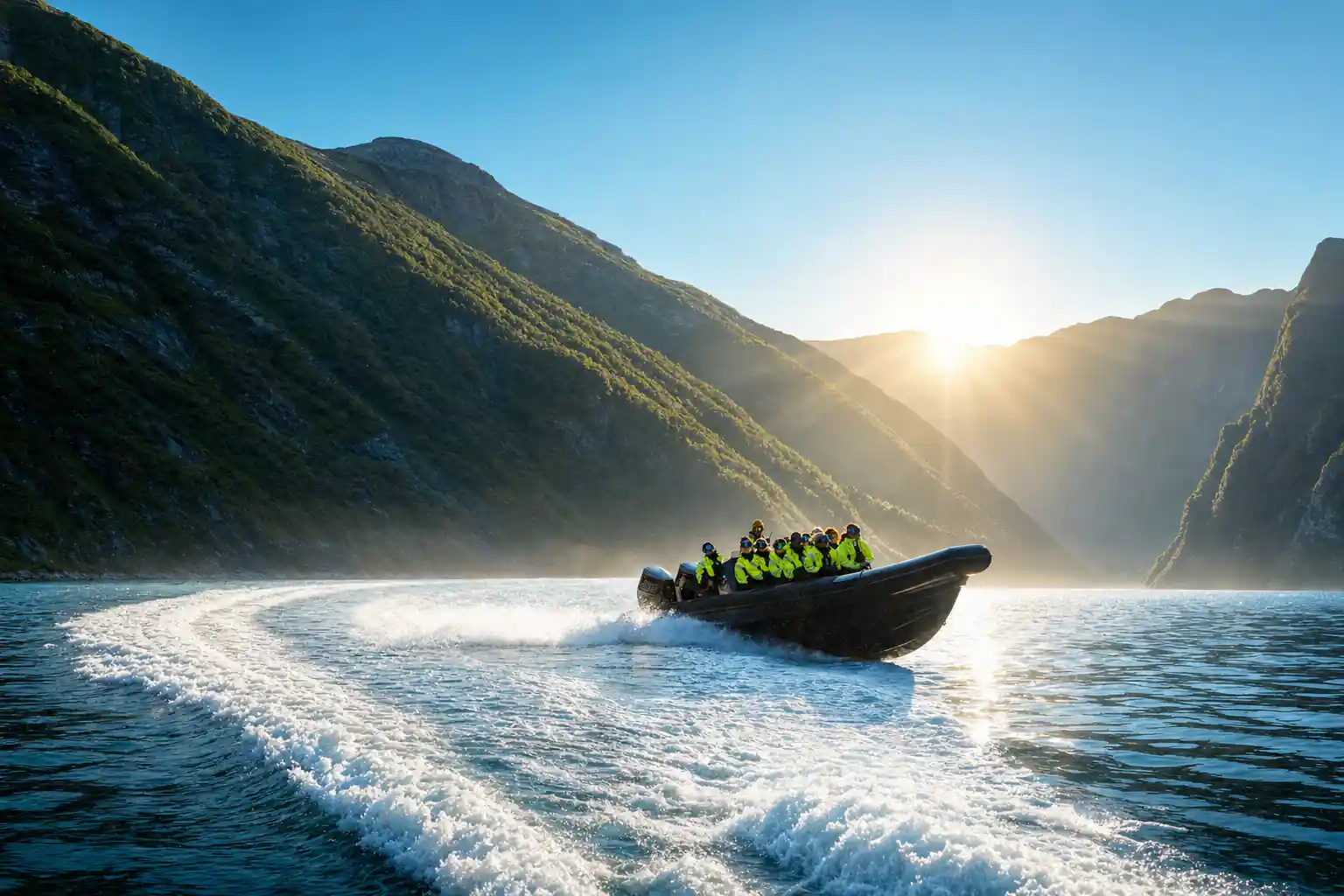
Spray flies as the RIB turns beneath the Hjørundfijord walls.
Wind chill, which is the real temperature
Wind chill is the number that matters on a RIB. The boat creates its own breeze, and once you are moving, the apparent temperature drops fast. You might leave the dock comfortable in a light jacket and feel a sharp chill within a minute. The ride lasts 105 minutes, so you have plenty of time to feel the difference between the sheltered harbour and the open fjord.[1]
May is the driest month, with 85 millimeters of precipitation, while December is the wettest, with 210 millimeters.[3] That does not tell you the air temperature, but it does tell you that wet weather is common. A waterproof outer layer and a warm mid layer are sensible. Cover your neck, wrists and head. Those are the places where cold air finds a way in. If you run cold, ask about extra layers before you leave the dock.
The best defence is to keep the wind off your skin. A buff around your neck, a hat that covers your ears, and gloves that still let you grip a rail make the ride comfortable. If you have a waterproof jacket with a hood, wear the jacket but leave the hood down unless the guide says otherwise. You can always add a layer when the boat slows. The point is not to be tough. The point is to enjoy the ride.
How wet you actually get
You will probably get some spray, not a soaking. A RIB throws water when it turns, when it crosses another boat's wake, or when it punches into a short chop. The Hjørundfijord tour lasts 105 minutes.[1] The RIB Coastal Safari lasts 1 hour and is limited to12 participants.[5] Both give you that low, open feeling where the water is close enough to touch.
Protect anything you do not want damp. A dry bag for your phone and camera is the simplest fix. If you bring a backpack, line it with a plastic bag. Wear quick-drying trousers rather than jeans. Denim stays cold when it gets wet. The suit will keep most of the water off your body, but your hands and face are exposed. A small microfibre cloth for your sunglasses or camera lens is a useful extra.
from US$157
The RIB Ålesund - Fijordsafari Hjørundfijord runs for 105 minutes and starts from US$157 per person.[1]
Where to sit
Where you sit changes the ride. The back seats are usually drier and a little less bouncy. The front seats give you the clearest view and the biggest hits. The middle is a good compromise if you want to stay warm and still see ahead. The RIB Hjørundfijord tour has a live tour guide in English.[1] Ask the guide where to sit if you have a bad back, a camera, or a preference for a dry face.
If you want to take photos, sit where you can turn without blocking anyone. On a small RIB, that often means the middle or the back. The RIB Coastal Safari is limited to12 participants, so it is worth thinking about your spot before you board.[5] Once the boat is moving, you should stay seated and keep your hands free. The guide will tell you when it is safe to move or take out a camera.
Can you hear anything
At speed, you will not have a normal conversation. The engine, the wind and the slap of the hull all compete. The guide speaks English on the Hjørundfijord RIB tour, so listen carefully during the briefing while the boat is still quiet.[1] If you miss something, ask before you leave the dock. It is much easier to repeat a safety point in the harbour than at full throttle.
A few practical habits help. Cup your hand behind your ear when the guide points something out. Use short signals with your neighbour instead of long sentences. Keep your phone in a waterproof pouch so you are not worried about spray. Check availability to see starting times, and arrive with time to spare so you are not rushed into your seat.[1] The ride is short, and the quiet moments at the start and end are worth saving your voice for.
If you are prone to cold ears or headaches, ear warmers or a thin headband can help. They also cut some of the wind noise. You do not need special equipment, but a little planning makes a difference. The guide will point out landmarks and wildlife, so keep one ear free for the commentary. The rest of the time, you can simply watch the water and the mountains.
How it compares to a fjord cruise
The RIB is the fast option. The Hjørundfijord RIB tour lasts 105 minutes and starts from US$157.[1] A fjord cruise is a different pace. The Fijord Tour Round Trip from Ålesund lasts 5 hours, starts from US$115, and is rated 4.22 from 60 reviews.[4] The Hjørundfijord Fijord Cruise roundtrip from Ålesund also lasts 5 hours, starts from US$115, and is rated 4.58 from 282 reviews.[7] Both go to Hjørundfijorden.[1][4]
Choose the RIB if you want speed, spray and a compact trip. Choose the cruise if you want to sit inside, stay dry and watch the scenery unfold slowly. The RIB is more exposed and more physical. The cruise is longer and gentler. Neither is better in every way. Think about the weather, your clothes, your camera and how much time you have in Ålesund. If you want the thrill of the fjord at close range, the RIB is the one that delivers it.
How travellers rate water tours
Average GetYourGuide ratings: RIB Hjørundfijord 4.88[1], RIB Coastal Safari 4.87[5], Hjørundfijord cruise round trip 4.58[7].
Compare from-prices for water tours
Adult from-prices in US dollars: from US$157[1], from US$105[5], from US$115[7]. Child rates are not listed in these facts.
How the booking window works
Your RIB ride, step by step
Book a slot
Choose a time that fits your port day. Reserve now and pay later, and cancel up to 24 hours in advance for a full refund.[1]
Meet the guide
Arrive at the RIB centre early. The guide speaks English and will run through the safety briefing before you board.[1]
Suit up
Put on the warm layers and the floatation suit. On RIB-Lofoten's tours, everyone is obliged to wear a suit supplied by the operator.[2]
Hold on
Keep both hands free, follow the guide, and stay seated when the boat is moving. The ride lasts 105 minutes.[1]
Back on shore
Return to the dock, peel off the suit, and check your photos. The tour stops at Hjørundfjorden.[1]
Ride the Hjørundfjord at RIB speed
from US$157Reserve now & pay later