Worth remembering
- Alesund receives 1730 millimeters of precipitation per year, ranging from 85 millimeters in May to 210 millimeters in December.[1]
- May is the driest month of the year, which makes late spring a reasonable bet for a day on the water.[1]
- Later in the year the days shorten and the rain builds towards December, the wettest month.[1]
- RIB Ålesund - Fjordsafari Hjørundfjord takes 105 minutes, from US$157, with a live English guide.[2]
- The RIB listing comes with reserve now and pay later, and free cancellation up to 24 hours in advance.[2]
- Top choice RIB Hjørundfjord Safari from US$157 Duration105 minutes[2]Rated4.88 from 150 reviews[2]GuideLive tour guide: English[2]CancellationUp to 24 hours in advance[2] Check availability
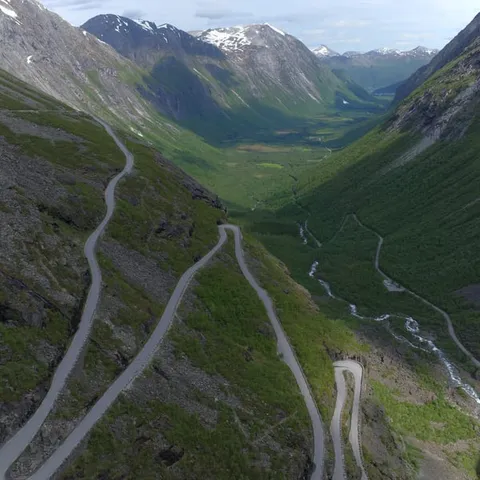
- Trollstigen Fjord Tour from US$190 Duration6 hours[3]Rated4.48 from 740 reviews[3]GuideLive tour guide: English[3]CancellationUp to 24 hours in advance[3] See this tour
- Fjord Tour with Lunch from US$156 Duration7 hours[4]Rated4.54 from 19 reviews[4]GuideLive tour guide: English[4]CancellationUp to 24 hours in advance[4] See this tour
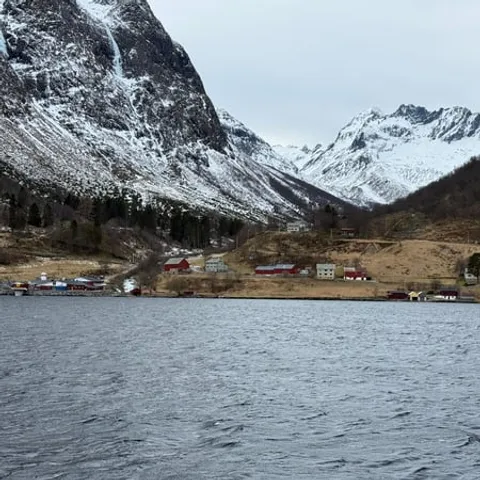
Precipitation amounts to 1730 millimeters per year: it is therefore abundant. It ranges from 85 millimeters in the driest month (May) to 210 millimeters in the wettest one (December).
The verdict on Ålesund weather and the RIB
Booking notes
On the water
- Dress warmer than the town forecast suggests, because spray and wind do the rest
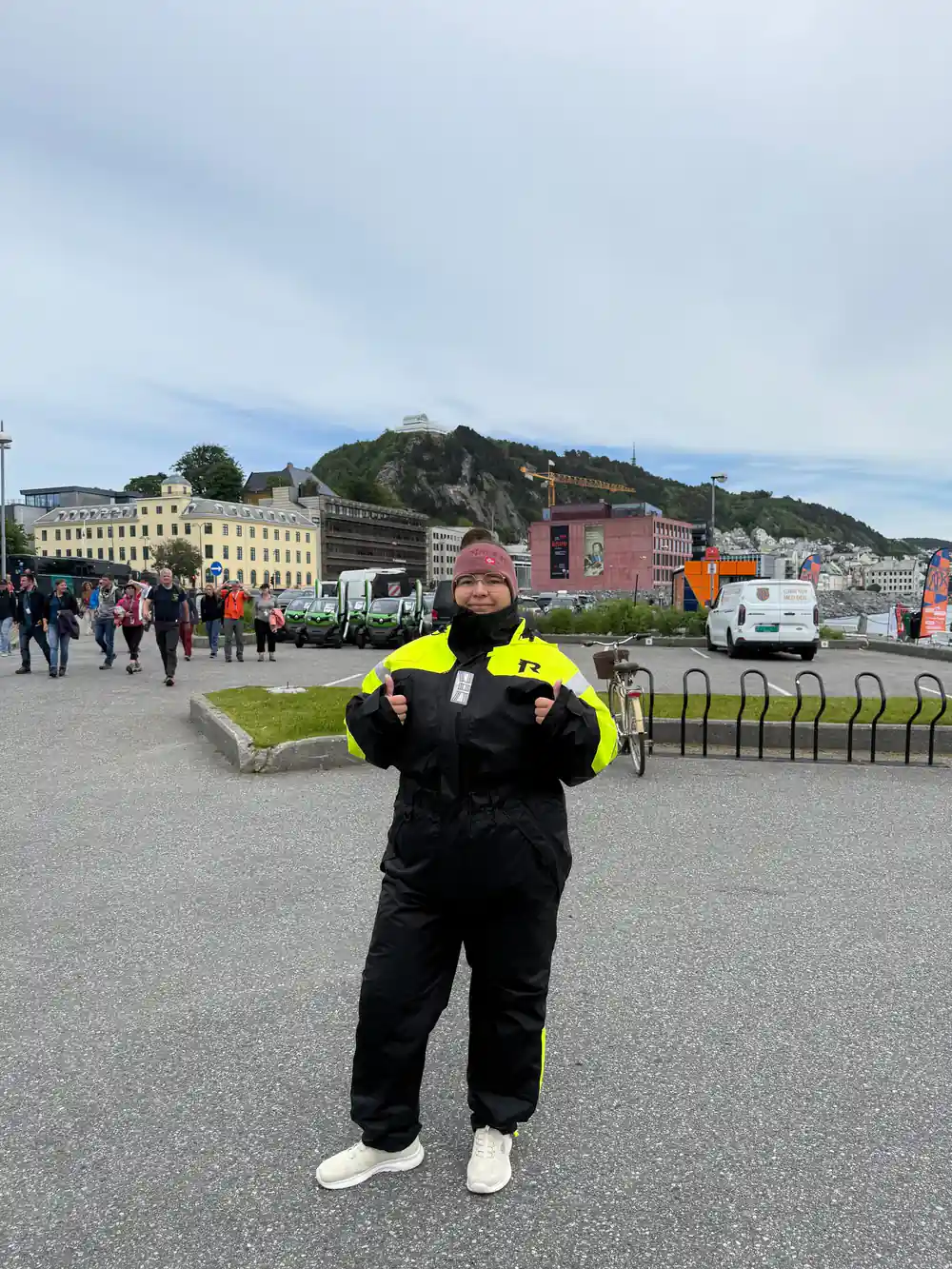
- On RIB tours a warm flotation suit is worn by everyone and supplied by the operator[5]
- Long light in summer and short days in winter, so plan your hours outdoors
- Pack a dry bag, gloves and a warm mid layer to wear under the suit
How to read Ålesund weather by month
Ålesund sits out on the coast, spread across seven large islands, with long fjord arms reaching inland behind it.[6] The sea is always close, the wind arrives off open water, and a forecast issued for the town can be wrong for the fjord and right for the harbour in the same hour. Pack for wet, moving air rather than for a fixed temperature, and expect a day outside to pass through cloud, sun and rain more than once.
The number to remember is rain. Alesund receives 1730 millimeters of precipitation per year, ranging from 85 millimeters in May to 210 millimeters in December.[1] Read that as a scale for your month rather than a promise for your week. A showery summer day can still hand you bright hours on the water, and a still winter morning can be dry and clear. The pattern matters more than any single day.
For a boat trip, wind and sea state decide more than air temperature, and both change quickly inside a fjord. Book something you can move or cancel: the RIB Ålesund - Fjordsafari Hjørundfjord listing comes with free cancellation up to 24 hours in advance and reserve now, pay later.[2] Starting times appear when you choose a date, so you can see what fits your own day before you commit.
Winter: dark, wet, and short on light
Winter here is coastal winter rather than deep cold: damp air, low grey light and rain arriving in bands off the sea. December is the wettest month, with 210 millimeters of precipitation.[1] Days are short and the light that does come is soft and blue, which is a good reason to give the town itself some time. Ålesund was rebuilt in Jugendstil, the Art Nouveau style of the time, after the fire.[7]
If a RIB trip is part of your plan, look at the calendar before you fix anything else. The listing shows starting times when you check availability for a chosen date, so you can see what runs in the week you are here.[2] The safari itself takes 105 minutes and runs with a live English guide, whichever month you pick.[2]
Winter also suits the slower options. Atlanterhavsparken, the Atlantic Sea Park, is considered one of Northern Europe's largest and most unique saltwater aquariums.[8] An audio guide tour of Ålesund and the surrounding islands takes 3 hours, from US$136.[9] For a full day afloat with lunch, the tour on MS Bruvik takes 7 hours and starts from US$156.[4]
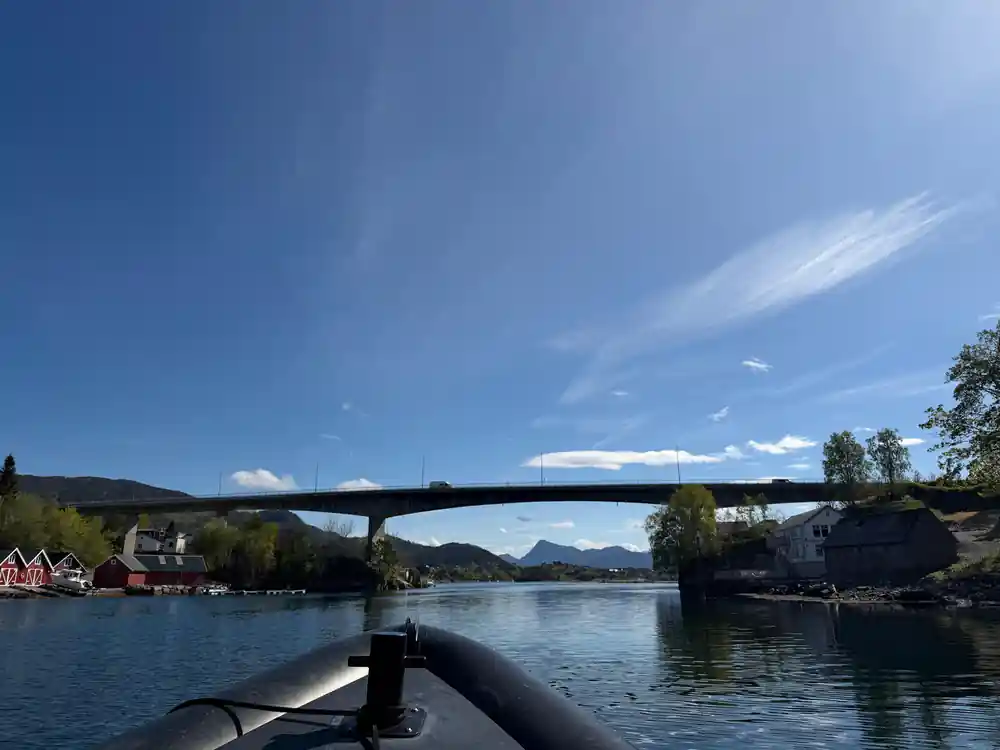
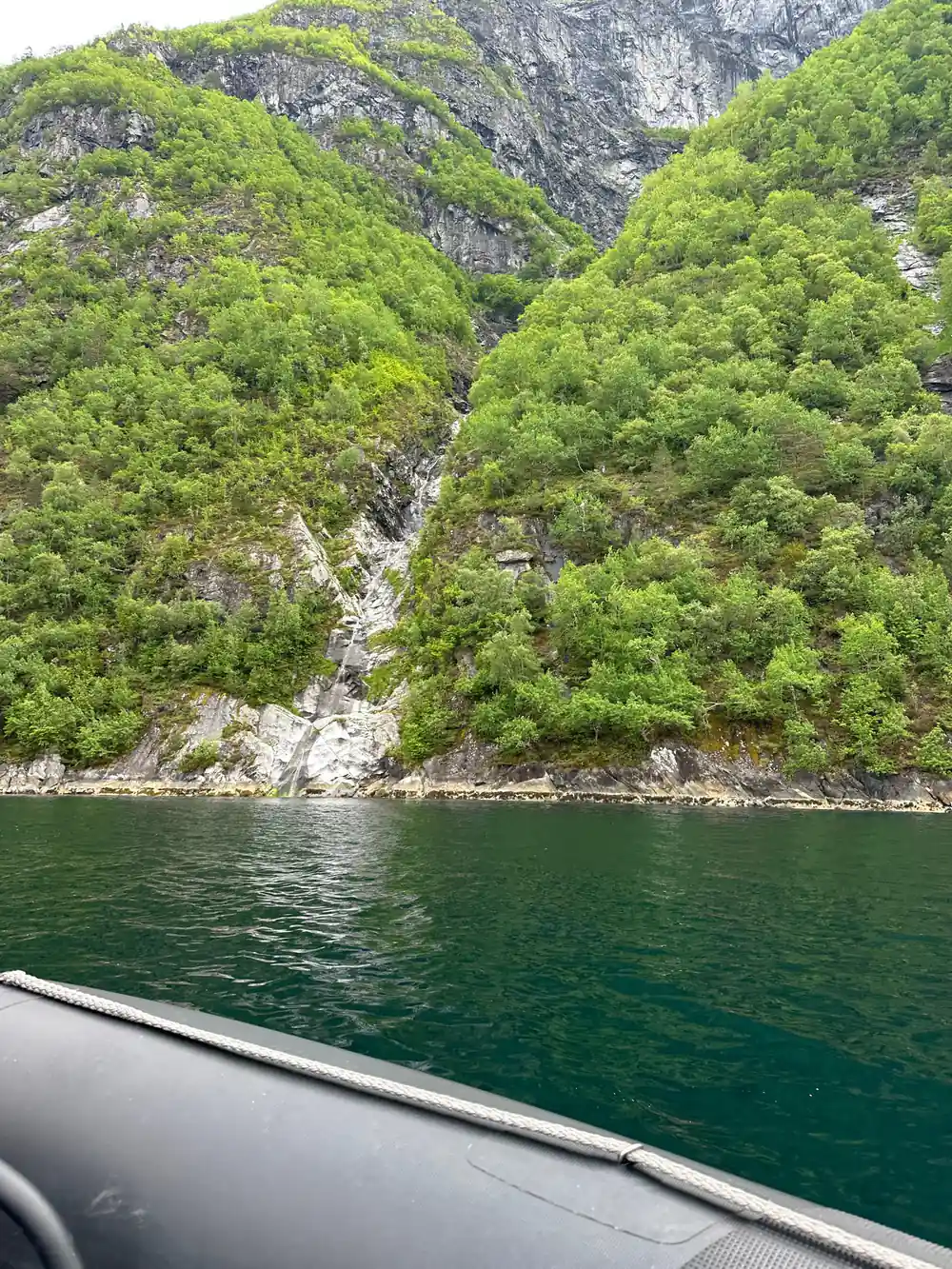
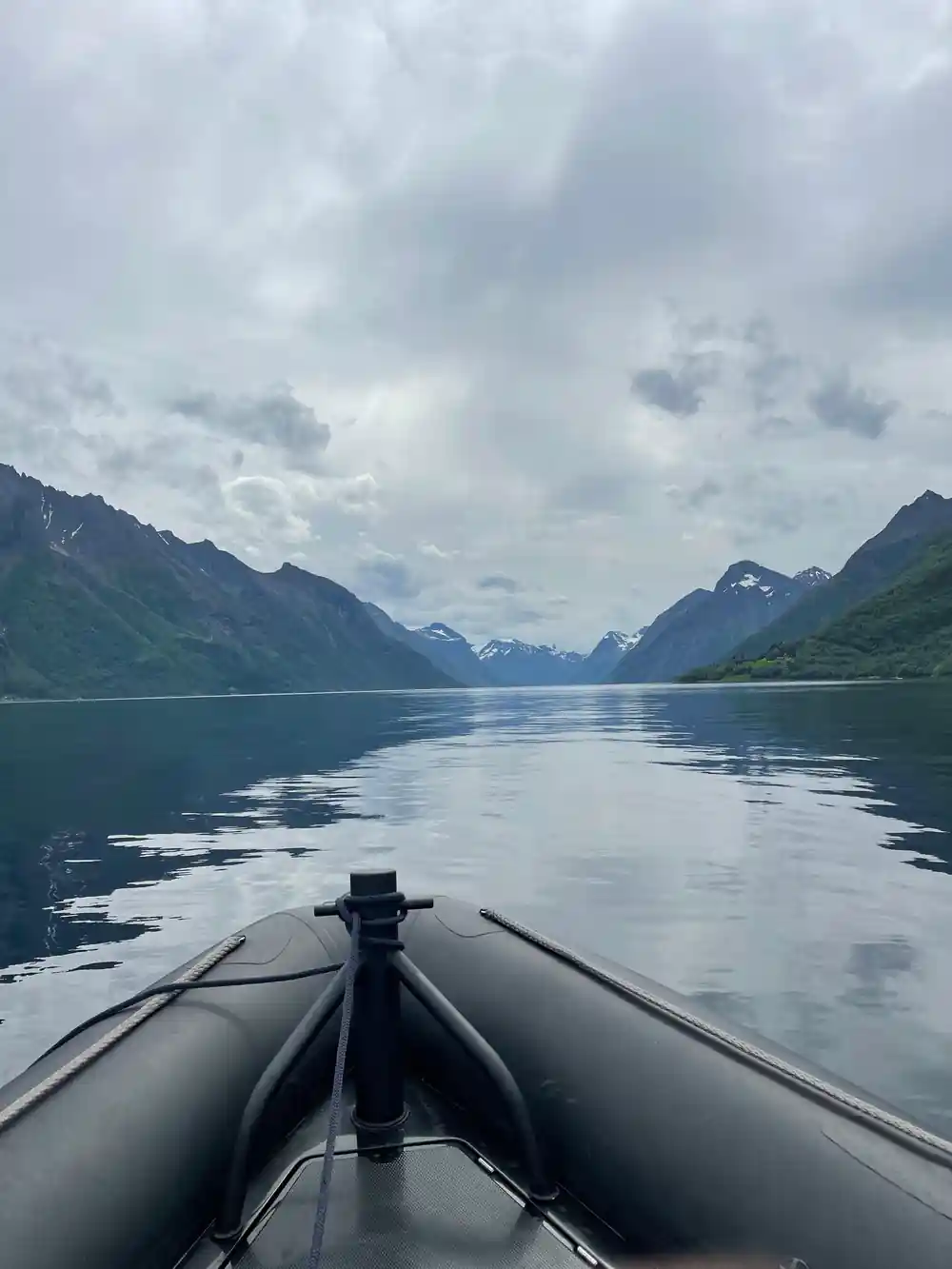
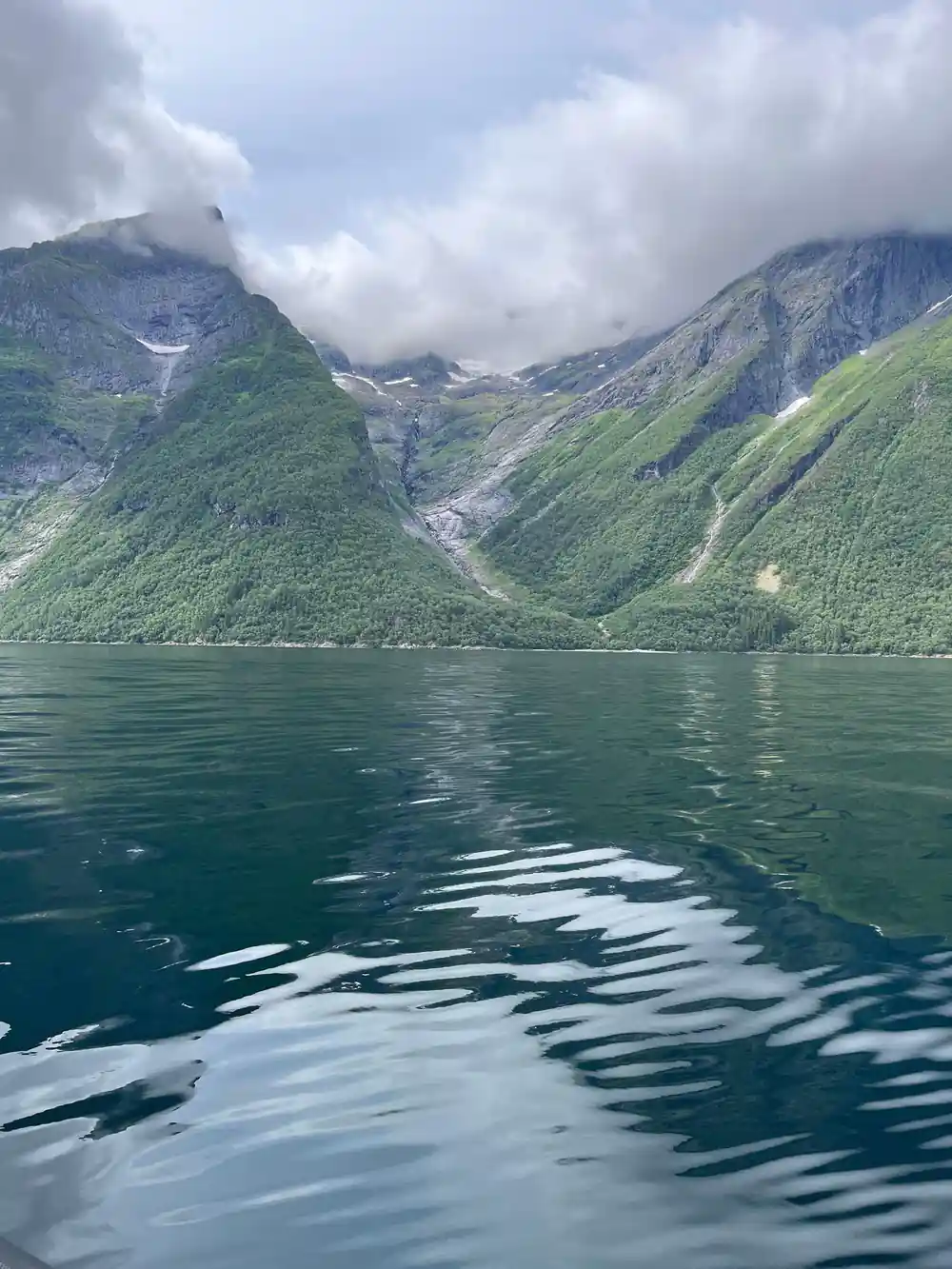
Spray, low cloud and green walls on the Hjørundfjord
Spring: May is the driest month
Spring arrives slowly on this coast. Snow holds on the high ground, meltwater feeds the waterfalls, and the light stretches a little further every week. Statistically this is your best shot at dry weather, because May sees 85 millimeters of precipitation, the lowest of any month, against 210 millimeters in December.[1]
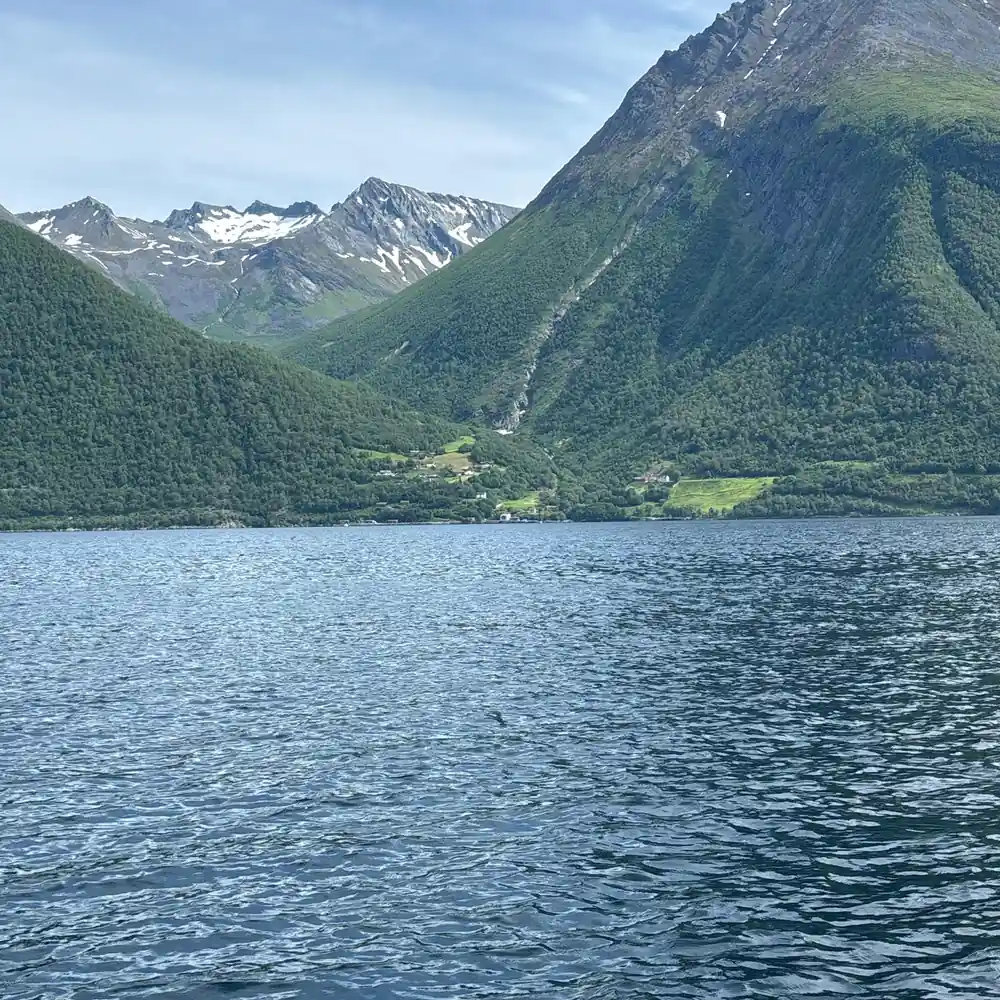
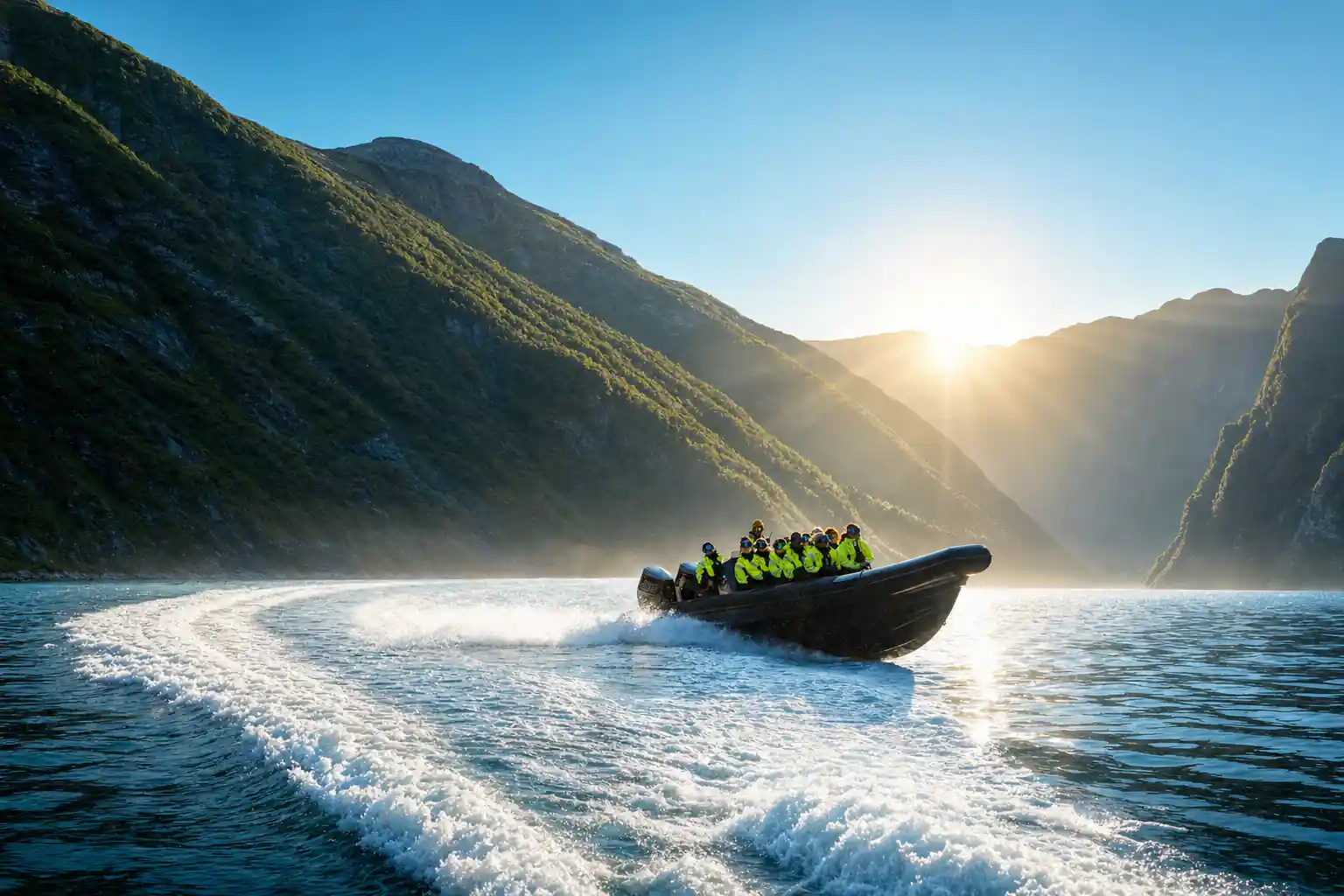
The sea warms more slowly than the air, so spray in early spring still feels sharp. A run out to Hjørundfjord in late spring gives you green slopes and snow above them in the same view, which is the season turning in front of you. The RIB safari takes 105 minutes and starts from US$157, with a live English guide.[2]
If you would rather sit still and watch the water go by, the Hjørundfjord round trip cruise from Ålesund takes 5 hours and starts from US$115.[10] Either way, prepare for a spring day that serves bright, cold, breezy weather and a downpour within the same afternoon.
Midsummer: light that barely ends
Through midsummer the light barely ends, and the evenings stay usable long after dinner. Air temperatures stay mild rather than hot, and the fjord water has had weeks of long days to lose its bite. It is the easiest time of year to be outdoors late and the hardest time to take a dull photograph.
It is also when Ålesund fills up. In 2024 the town had 656,678 day cruise passengers, the highest number among Norwegian ports.[11] The viewpoints and the path up to Aksla, reached by a stone staircase of 418 steps,[12] are busiest in the middle of the day, so go early or late if you want quiet.
Book your water time for the edges of the day, when the light lies low across the fjord. The RIB safari takes 105 minutes and starts from US$157, with free cancellation up to 24 hours in advance.[2]
from US$157
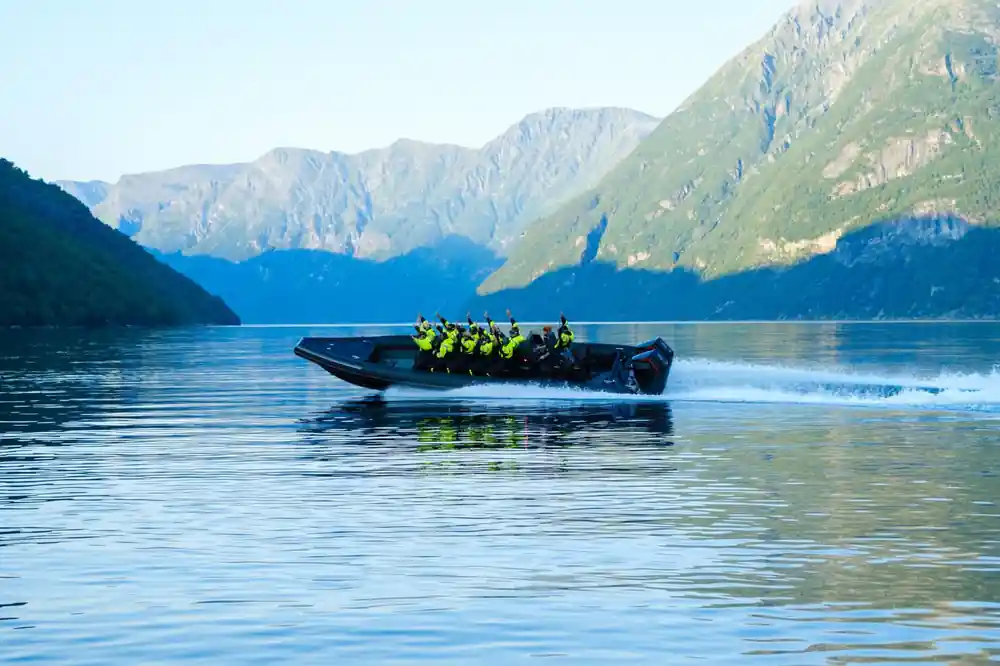
The RIB safari to Hjørundfjord runs 105 minutes with a live English guide and free cancellation up to 24 hours in advance.[2]
August and September: warm water, busy quays
By late summer the sea has had months of daylight to warm up, and spray feels far gentler than it does in spring. The air is mild, the light is softer and lower, and the harbour starts to empty as the season winds down.
The water here works on a grand scale. The Storfjord, the water that carries on towards Geiranger, is one of Norway's ten longest fjords, stretching 110 kilometers out to the Sulafjord and reaching a depth of 672 meters at its deepest.[13] From a RIB you feel that scale as height on both sides and a long way to the next turn.
Other options for this window include the Fjord Tour Round Trip from Ålesund, 5 hours and from US$115,[14] and the Hjørundfjord roundtrip cruise, also 5 hours and from US$115.[10] Both leave you ashore with the evening still light.
Autumn: the rain builds towards December
Autumn is when the rainfall climbs back towards December's 210 millimeters.[1] Squalls come through fast, the peaks slide in and out of cloud, and the lower slopes turn. Boat days still work, but they need a looser plan and a waterproof bag.
Trips keep running into the darker half of the year. The winter fjord cruise to Geirangerfjord takes 9 hours and starts from US$325.[15] On foot in town, the Art Nouveau walking tour takes 2.5 hours and starts from US$72.[16]
Bring kit that works in sideways rain: a waterproof shell, a warm mid layer, gloves and a dry bag for your phone. Getting here is straightforward at any time of year, with Bergen 45 minutes away by plane, about 7 hours and 30 minutes by car and about 9 hours and 30 minutes by bus.[17]
What cold and wet actually feel like on a RIB
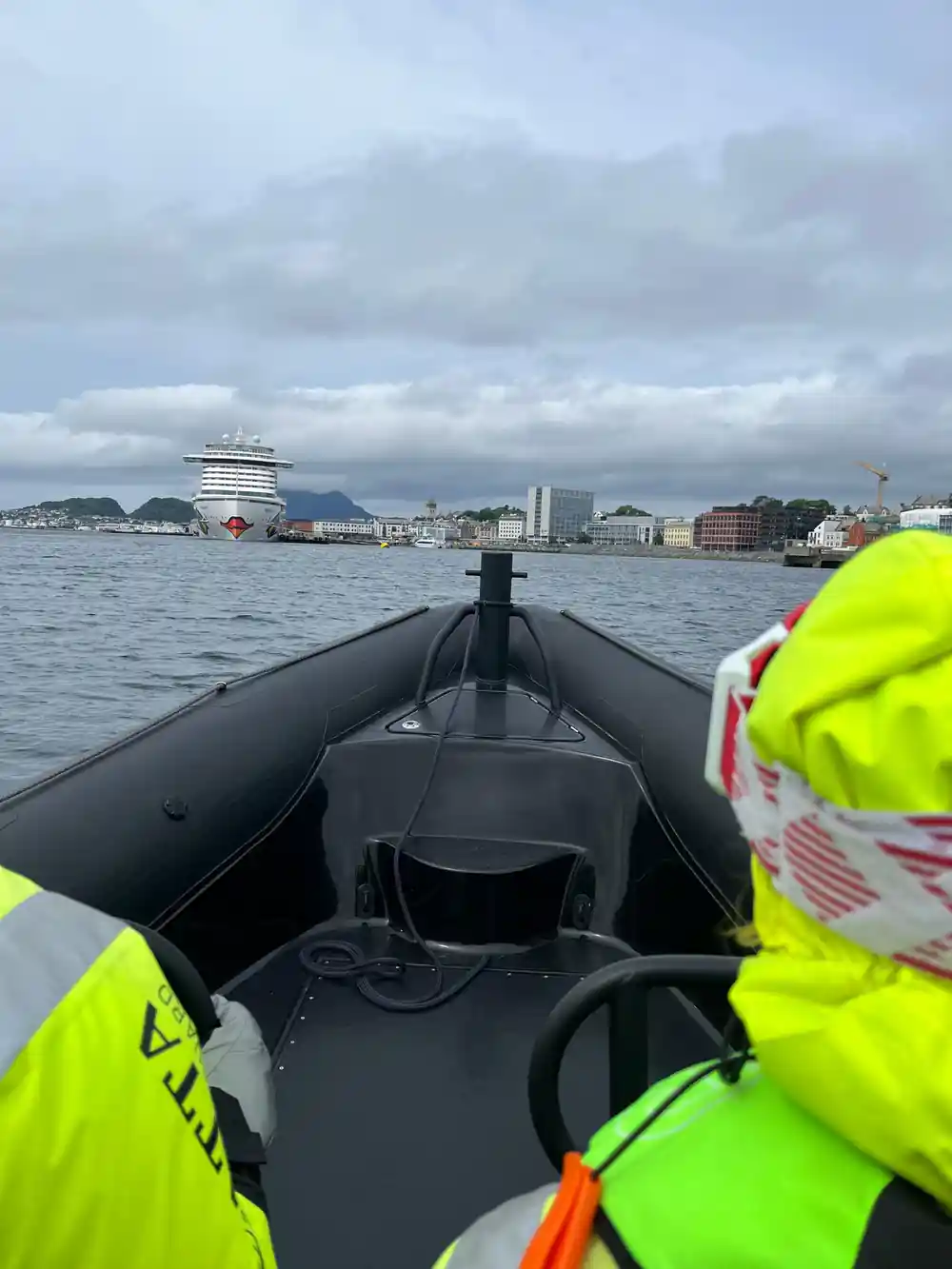
A RIB changes how weather feels. You sit low and open to the sky, and once the boat is moving the wind you meet is far stronger than anything the town forecast prepared you for. Spray comes over the tubes on turns and in chop, and hands and faces notice it first.
Norwegian operators take that seriously. RIB-Lofoten, which runs trips above the Arctic Circle, states that everyone on board is obliged to wear a warm flotation suit, which the operator supplies.[5] Treat that as the model for the layers underneath: wool against the skin, a buff, and gloves you can still use when they are wet.
In Ålesund the RIB safari takes 105 minutes, runs with a live English guide and starts from US$157, with free cancellation up to 24 hours in advance.[2] Choose your month with the rain figures in mind, dress for spray rather than for the town, and the weather becomes part of the day instead of an obstacle to it.
Precipitation in Alesund
Monthly and annual precipitation for Alesund from the same source; May is the driest month and December the wettest.[1]
What a fjord day costs, from prices
All amounts are US dollar from-prices taken from the individual GetYourGuide listings.[2][3][4][10]
When to go, season by season
Plan around the weather
Pick your month
May is the driest month in Alesund and December the wettest, so the rain figures are worth a look before you fix dates.[1]
Check the date
The RIB listing shows starting times when you check availability for a chosen date, so look at your own week first.[2]
Book the safari
RIB Ålesund - Fjordsafari Hjørundfjord takes 105 minutes, from US$157, with a live English guide.[2]
Stay flexible
Free cancellation up to 24 hours in advance and reserve now, pay later both apply to the RIB listing.[2]
Dress for spray
RIB-Lofoten says everyone on board its tours wears a warm flotation suit supplied by the operator, so layer up underneath.[5]
See the Hjørundfjord from the water, in any month
from US$157Reserve now & pay later